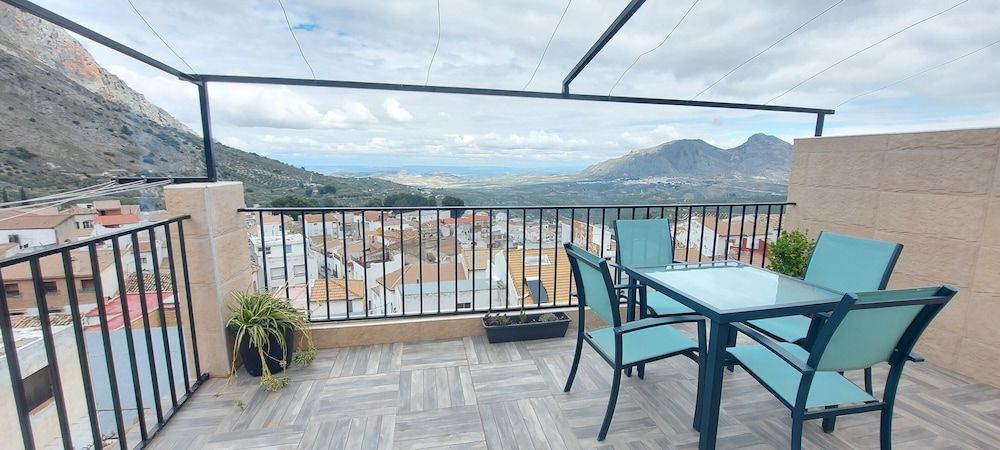
Albanchez de Mágina is shaped by its steep setting beneath La Serrezuela. The castle’s upper stronghold stands on the range’s eastern slope, at about 950 metres above sea level, overlooking the settlement and a broad valley. Here, the ground is not merely a backdrop: the abrupt rock determined where defences could be built and how the old settlement took form.
A stronghold fitted to the rock
What is commonly called the Castle of Albanchez is, in fact, its alcazarejo, or small fortified enclosure. The inner precinct lay roughly 50 metres below it, at the foot of the crag. The upper structure gathers two compact sections around a small, triangular courtyard. On its eastern side, a surviving crenellated parapet gives a sense of the fortification’s defensive purpose; the tower includes two chambers, one with a pointed vault and the remains of a plaster-lined cistern.
The scale is strikingly constrained by the site. Despite its imposing exterior, the highest section forms only a narrow rectangular platform, while the lower enclosure occupied the more accessible ground beneath the rock. The result is a stronghold understood through its relationship with the slope: the heights offered a commanding position, while the terrain itself shaped the arrangement of walls, tower and water storage.
Traces of earlier settlement
Archaeological evidence at El Rosel points to an earlier medieval nucleus at the western edge of the present settlement. Stone and adobe structures have been recorded across an area of about a hectare. The precise beginnings remain uncertain, but some researchers have proposed an origin between the seventh and ninth centuries. A later stretch of wall, thought to date from around the eleventh century, followed the edge of a small drop and included a square tower that may have guarded an entrance.
Other remains widen the historical picture without making it a simple, uninterrupted story. At San Román, finds include Roman-period pottery and fragments of terra sigillata; an account published in 1946 also recorded rough burials and Roman coins in the area. These traces belong to different places and periods, each offering a partial view of human activity around the settlement rather than a complete account of its past.
In the town, the Church of Nuestra Señora de la Asunción stands beside a level square amid steeply sloping streets. Its three aisles are divided by substantial Tuscan columns, and its interior combines a timber roof and raised wooden choir with prominent stonework. Together, the church, the layered settlement remains and the castle’s close dependence on the crag give Albanchez de Mágina a distinctive character: its history is legible in the ways people built around a demanding landscape.