Cortijo Claudia, Albox
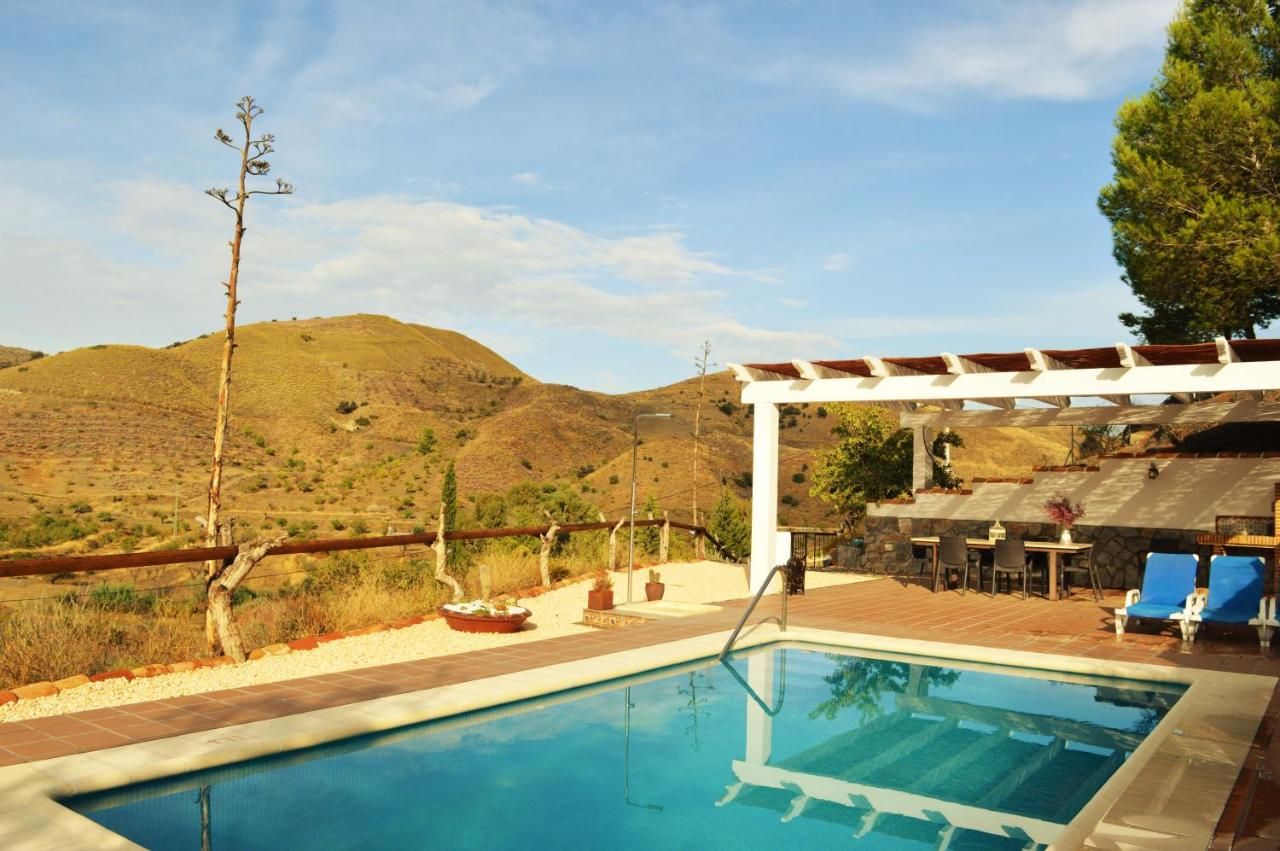
Cortijo Claudia pairs a private saltwater pool with the independence of a self-catering cortijo in Albox. A kitchen, garden, terrace and family-minded room options give the property substance for a stay built…
Read hotel guideThe art of finding somewhere wonderful.
Video by Nirjhar Basak on Pexels
Albox is best understood through the evidence scattered across its surrounding hills and ravines. Rather than a single monument telling the whole story, its recorded heritage spans prehistoric settlements, medieval fortifications and religious architecture. The result is a place whose history is closely tied to the ground: ridges above the ramblas offered positions for settlement and watch, while later buildings preserve a more domestic and devotional record.
Several archaeological sites trace occupation back to the Bronze Age and earlier. At Terrera Alcaina, a Copper Age settlement occupied a flat-topped hill above the Rambla de Olías; at El Saliente, Bronze Age remains lie on the hill now associated with the sanctuary. The Sierra del Madroño preserves evidence of settlement on terraces, including material that may point to copper-working. These are archaeological records, not a promise of accessible ruins, but together they reveal how people used the high ground and the courses of the local ravines.
The medieval landscape is equally striking in its strategic placement. Torre de Aljambra stands on a hill east of Albox, overlooking the Rambla del Saliente and the Medio Almanzora. Its surviving square masonry walls rise from a solid base built to accommodate uneven rock; nearby, a cistern cut into the stone is still used. Torre Terdiguera, a cylindrical watchtower dating to the thirteenth or fourteenth centuries, formed part of a defensive system controlling a passage by the Rambla de Olías. Its elevated entrance and truncated form make clear that what survives is only part of the original structure.
The Castillo El Castillico offers a more fragmentary history. The Muslim fortification was built over an earlier settlement, and its history includes successive captures before a 1518 earthquake left it almost destroyed. Most of the castle has since disappeared, its remains reused in local houses. The story is less one of a preserved stronghold than of a landmark absorbed into the later town.
At the Sanctuary and Monastery of Nuestra Señora de los Desamparados del Saliente, architecture occupies a high platform in the Sierra de las Estancias. The extensive complex brings together a sanctuary, cloister and other buildings; within the church, a Latin-cross plan, side chapels and a dome over the crossing give the interior its formal structure. The Iglesia de Santa María and Iglesia de San Antonio offer other expressions of religious architecture, with vaulted naves and domed crossings.
Albox’s recorded domestic buildings add a quieter counterpoint: whitewashed façades, timber fittings, interior patios and, in one documented house, the spaces of a ceramics workshop and wood-fired kilns. Together, these places suggest a heritage shaped not only by conquest and worship, but also by work and household routines. In Albox, the most rewarding perspective is often the relationship between architecture and terrain: a tower above a ravine, a sanctuary on a mountain platform, or the traces of settlement on a hillside.
Cortijo Claudia pairs a private saltwater pool with the independence of a self-catering cortijo in Albox. A kitchen, garden, terrace and family-minded room options give the property substance for a stay built…
Read hotel guide