The hidden Place, Alcaudete
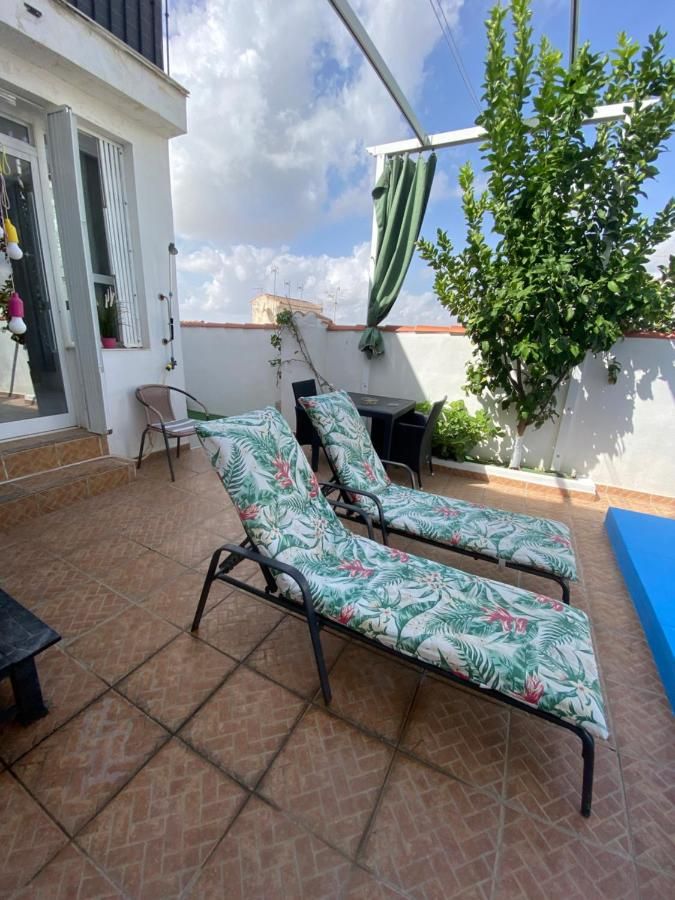
The Hidden Place is a private, ground-floor Alcaudete apartment with a kitchen, outdoor dining space and a private pool, plus a plunge pool and hot tub. Its self-contained setup offers a practical…
Read hotel guideThe art of finding somewhere wonderful.
Video by Nirjhar Basak on Pexels
Alcaudete’s history is written into both its skyline and the fabric of its streets. On a hill above the town, its castle follows the contours of the ground; below, the former line of the medieval defences can still be traced through fragments of wall and the streets around Plaza 28 de Febrero. The result is a place where fortification is not a distant backdrop but part of the town’s visible structure.
The castle is the most commanding expression of that history. Its polygonal plan occupies a hill overlooking a wide sweep of land, with three lines of defence: the alcázar, a barbican and a lower enclosure. The surviving complex includes a keep, walls and a building for the garrison. Its construction adapted to the steep slope, while square towers and projecting defensive works strengthened the enclosure. The scale and arrangement make the castle a particularly clear way to understand how the site’s topography shaped its fortifications.
Alcaudete’s urban wall tells a longer story of adaptation. Built in the Almohad period from rammed earth on a masonry base, it was reused after the Christian conquest and the town’s transfer to the Order of Calatrava in 1246. Later alterations responded to the growing use of artillery. The surviving remains are incomplete, but their former course is recorded through the town, including the area by Plaza 28 de Febrero. Beside the old town hall stands the Arco del Ayuntamiento, a stone arch that replaced an earlier medieval entrance and now marks the passage between the square and Calle General Baena.
The former Casa Consistorial, now the Ayuntamiento, rewards a closer look at its carefully composed façade. Its original stone portal is centred beneath a balcony, with the figure of Saint Michael, the town’s patron, in a niche above. The building’s arrangement around three bays and a small internal courtyard gives its formal exterior a more practical architectural counterpart.
Other buildings offer different readings of local civic and religious life. Casa de los Leones is organised around a central courtyard with a stone arcade; its façade combines an off-centre portal, sculpted heraldic detail and a broad timber eave. The churches also preserve distinct architectural forms: Santa María has a basilican plan and elaborate Plateresque portals, while San Pedro’s three aisles are divided by rounded arches. The Convent of Santa Clara, founded in a period of late-sixteenth- and early-seventeenth-century building, has a particularly distinctive entrance, framed by paired Solomonic columns.
Alcaudete is best approached as a connected historic landscape rather than a checklist of monuments: the castle’s hilltop defences, the traces of the town wall and the civic and religious buildings below each reveal a different part of its past. Together they give this Andalusian town a strong sense of place, grounded in the relationship between its architecture and its terrain.
The Hidden Place is a private, ground-floor Alcaudete apartment with a kitchen, outdoor dining space and a private pool, plus a plunge pool and hot tub. Its self-contained setup offers a practical…
Read hotel guide