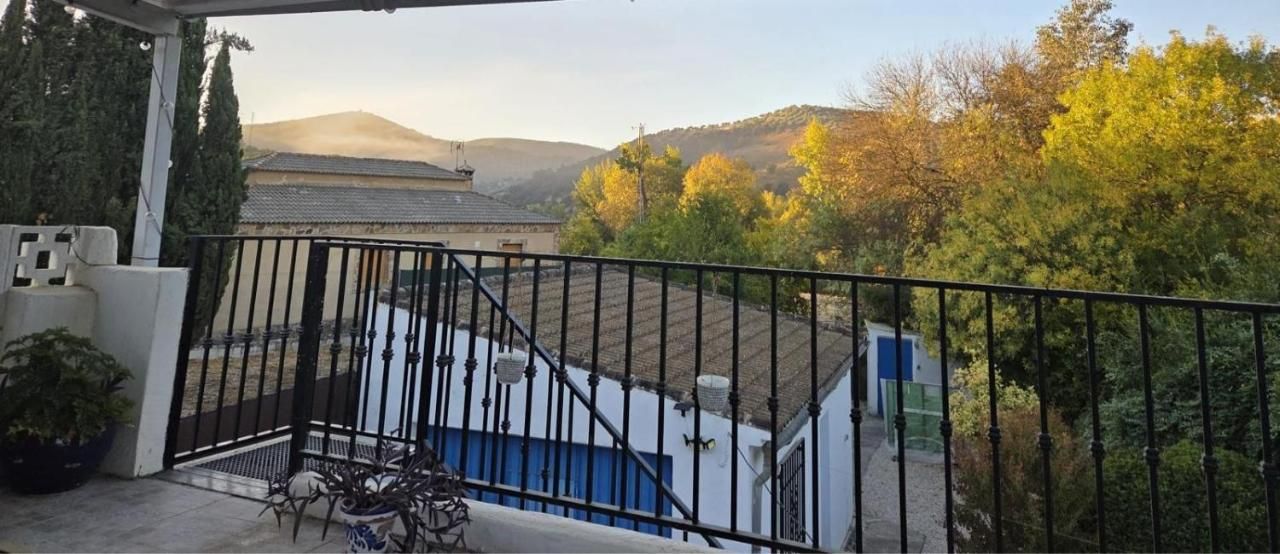
Casa Margarita, Algarinejo
Casa Margarita pairs a private pool and garden with a well-equipped kitchen, family provisions and the independence of a country-house stay in Algarinejo. Its terrace, grill and outdoor space make it easy…
Read hotel guideThe art of finding somewhere wonderful.
Video by Nirjhar Basak on Pexels
Algarinejo’s heritage is best explored through the buildings and defensive remains that connect its village life with a much older landscape. In the centre, the Church of Santa María la Mayor makes a striking impression in stone. Built at the end of the eighteenth century on the foundations of an earlier ruined church, it has three naves, side chapels and a tower. Inside, the central nave is divided from the side aisles by arches resting on substantial square columns, while neoclassical altarpieces preserve a different kind of detail from the robust masonry outside.
The Ermita del Santo Cristo offers a more intimate account of local devotion. Built in the eighteenth century at the end of a Via Crucis that began at the parish church, it marked the last of fourteen stations, the others extending through the outskirts of the village. A painting of the Holy Sepulchre was once kept there and was an object of devotion across the municipality. The chapel later fell close to ruin before being restored, with the work funded by two local residents. Its story ties a modest religious building to a route through the town and to the people who sustained it.
Beyond the village, Torre Pesquera occupies a promontory above the Pesquera river, near its meeting with the Genil. Its surviving defensive works include a large semicircular tower, a rectangular tower and sections of wall. The position helps explain the site’s double purpose: it watched over the river and defended a settlement. Written references to inhabitants at Pesquera reach back to the thirteenth century; in 1439, during a truce, Pesquera and Cesna were mentioned among places already taken by the Castilians.
The remains of Castillo de Cesna convey the scale of another fortified stronghold. Its principal enclosure occupied the summit of a hill, with traces of a perimeter wall and seven towers; remains of an outer enclosure extend down the slopes. The surviving masonry is fragmentary, but its arrangement still suggests a carefully defended height. Read together, these sites offer a sense of Algarinejo’s history through both its communal buildings and the elevated positions chosen for defence.
Casa Margarita pairs a private pool and garden with a well-equipped kitchen, family provisions and the independence of a country-house stay in Algarinejo. Its terrace, grill and outdoor space make it easy…
Read hotel guide