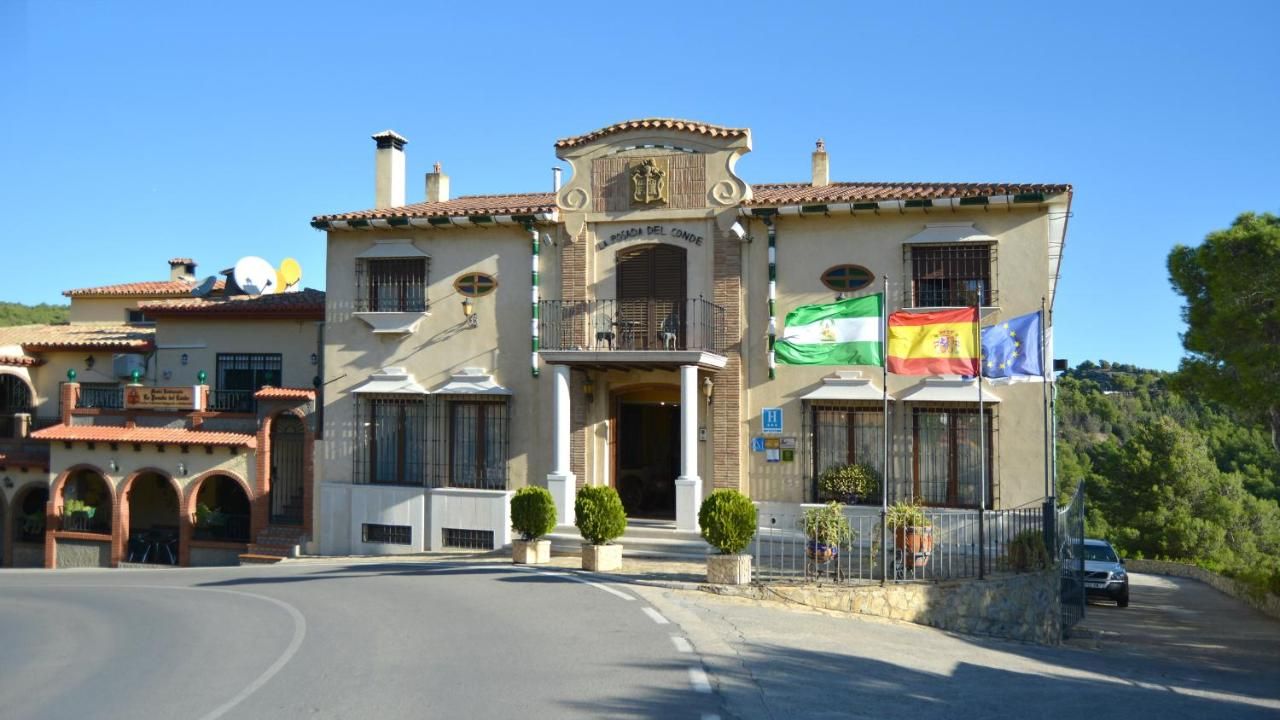
La Posada del Conde, Ardales
With lake and mountain views, canoeing and fishing among its listed features, La Posada del Conde offers a full-service hotel stay shaped by Ardales’ waters. On-site dining, a hot tub, free parking…
Read hotel guideThe art of finding somewhere wonderful.
Video by Nirjhar Basak on Pexels
Ardales is a place where the story of the settlement extends well beyond its streets. The town stands on the northern slope of Cerro de La Calinoria, at 565 metres above sea level, within the Guadalteba district of Málaga. Its setting belongs to a landscape shaped by the Turón and the surrounding mountain country; some of its most striking heritage lies in the relationship between rock, river and human construction.
In the town, the Iglesia de Nuestra Señora de los Remedios occupies a prominent place of social interaction. Its interior preserves a Mudéjar imprint associated with the fifteenth century, though the church was substantially remodelled in 1720. Three aisles are divided by thick cylindrical columns, with pointed arches above; the central nave has an intricate timber roof. The brick tower, dating to around 1755, is finished with ceramic tilework, while the restrained entrance echoes its architectural scheme. Together, these details offer a close-reading of a building shaped by more than one period.
Further out, Castillo Turón occupies a dramatic position above the river of the same name, west of the urban centre. The elongated fortress has a north-eastern front with flanking towers and a bent entrance reached by a ramp; on the opposite side, the precipice forms a natural defence. Its origins are traced to the twelfth century, when it belonged to the Nasrid frontier system. The record also describes its fortification in the mid-fourteenth century during a campaign by Muhammad V. Here, the terrain is not simply a backdrop: it is part of the castle’s defensive design.
Cueva de Ardales gives the area a much older dimension. Set in the limestone and marble slopes of Cerro de La Calinoria, the cave extends for 1,577 metres, according to the heritage record. Its entrance was adapted for visits in the nineteenth century, and within, the route passes through large chambers, including the Sala de las Estrellas. The cave’s scale and position make the geology itself central to understanding this part of Ardales.
Another expression of local heritage is the Ermita de Nuestra Señora de Villaverde, on raised ground cut by the Turón. This modest three-aisled building uses masonry of sandstone and earth; its façade carries a tiled image of the Virgin, and the interior recreates a horseshoe arch. It presents a very different architectural character from the parish church, while remaining closely tied to the surrounding landscape.
Ardales rewards attention to these contrasts: a central church shaped by successive building campaigns, a frontier stronghold set above a river, and places of worship and natural interest formed by the region’s stone. Rather than a single landmark defining the town, it is the variety of these settings that gives Ardales its distinctive sense of place.
With lake and mountain views, canoeing and fishing among its listed features, La Posada del Conde offers a full-service hotel stay shaped by Ardales’ waters. On-site dining, a hot tub, free parking…
Read hotel guide