Casa Del Mirador, Arjona
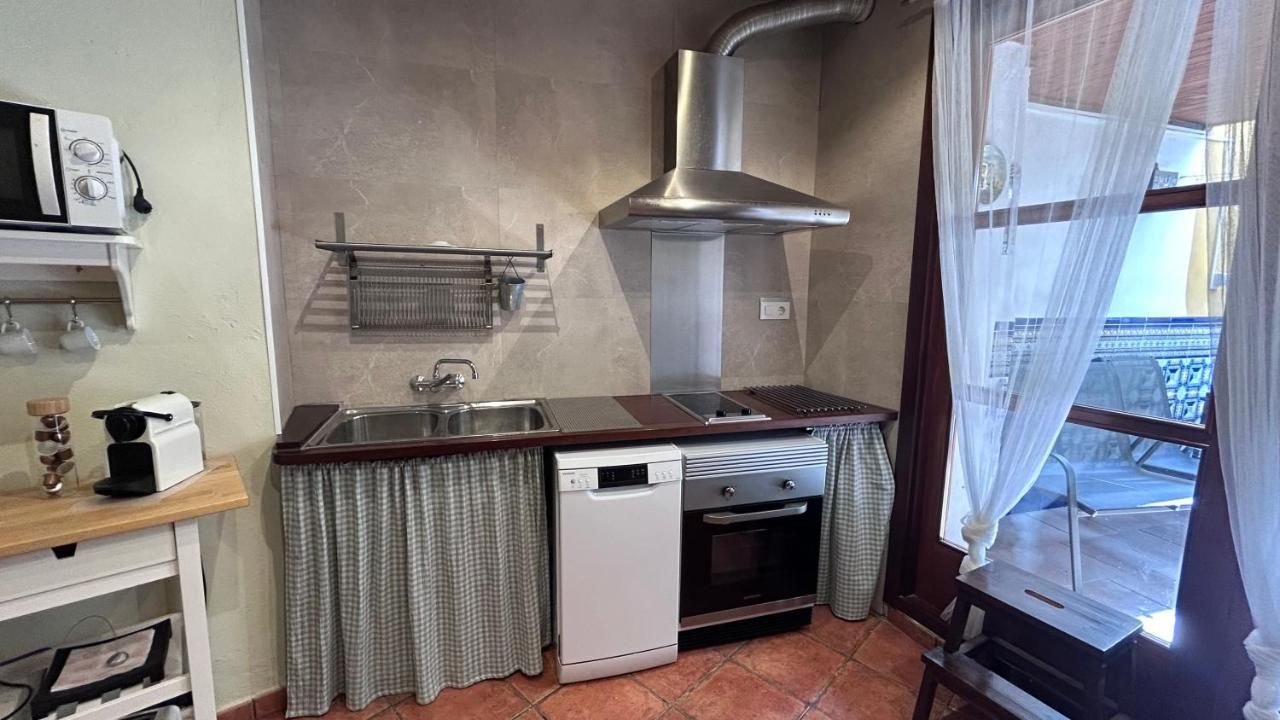
Casa Del Mirador combines a city view with family-friendly provisions, dining facilities and the practical support of a 24-hour front desk. Its setting in Arjona gives the stay a historical dimension, from…
Read hotel guideThe art of finding somewhere wonderful.
Video by Nirjhar Basak on Pexels
Arjona’s history is not confined to a single monument. Beneath and around its present-day streets, archaeological evidence records successive uses of the same ground: settlement, fortification, burial and public space. The town’s elevated centre, around Plaza de Santa María, brings those layers into particularly sharp focus.
An archaeological record identifies a pre-Roman oppidum on Arjona’s hilltop plateau. The town was fortified in 888, during the Muladi revolt, on the order of the emir of Córdoba; traces of those defences have been associated with stepped outcrops. Later, in the late twelfth century, the Almohads undertook further fortification. Their walled enclosure had around 22 towers and two larger outwork towers, one octagonal, while a broader, boat-shaped circuit followed the hill’s contours. The surviving account describes steep ground that needed little more than a simple defensive parapet in some places.
The citadel occupied the plateau, with the castle area at one end. Its defences included an inner wall and an outer wall. The castle was substantially remodelled in the Christian period, when its keep dates from; the former citadel site is now occupied by the Church of Santa María and the Hermitage of the Saints. The sequence makes Arjona’s defences more than a backdrop: they show how the shape and strategic use of the hill changed over time.
The Church of San Juan preserves a striking fragment of its sixteenth-century construction in the principal doorway, made by Juan de Marquina in 1531. Its Plateresque design combines a rounded arch with carved figures and foliage, pilasters, a richly worked entablature and a rounded pediment. The church was almost entirely destroyed during the Civil War; its doorway was dismantled and restored, and the rebuilding, carried out in stages after the war, was completed in 1955.
At the Church of Saints Bonoso and Maximiano, Juan de Aranda’s 1639 design began with the crypt. Its exterior doorway has a radial voussoir arch, an inscribed surround and a straight pediment. Above, the single-nave church opens towards Santa María square; the presbytery and chapel behind it belong to later eighteenth- and nineteenth-century work. Nearby, the early-twentieth-century Barón de Velasco family crypt offers a very different interior: a gilded mosaic vault with a Pantocrator and angels, marble reliefs and figures representing Faith, Hope and Charity.
Arjona’s archaeological record extends beyond its most prominent buildings. Finds across the town and its surroundings include material from prehistoric, Iberian, Roman and medieval periods. Excavation in Plaza de Santa María confirmed Roman, medieval and early modern phases, while other sites in the municipality preserve evidence of Roman villas and, at Pachena, material spanning several periods. These records lend the town a layered character: its past is present both in landmark architecture and in the less visible traces of settlement around it.
To understand Arjona, look at the relationship between its hilltop, its former defences and the buildings that occupy old civic and religious ground. Together they tell a local story of adaptation, destruction and rebuilding, rather than a history frozen in one celebrated age.
Casa Del Mirador combines a city view with family-friendly provisions, dining facilities and the practical support of a 24-hour front desk. Its setting in Arjona gives the stay a historical dimension, from…
Read hotel guide