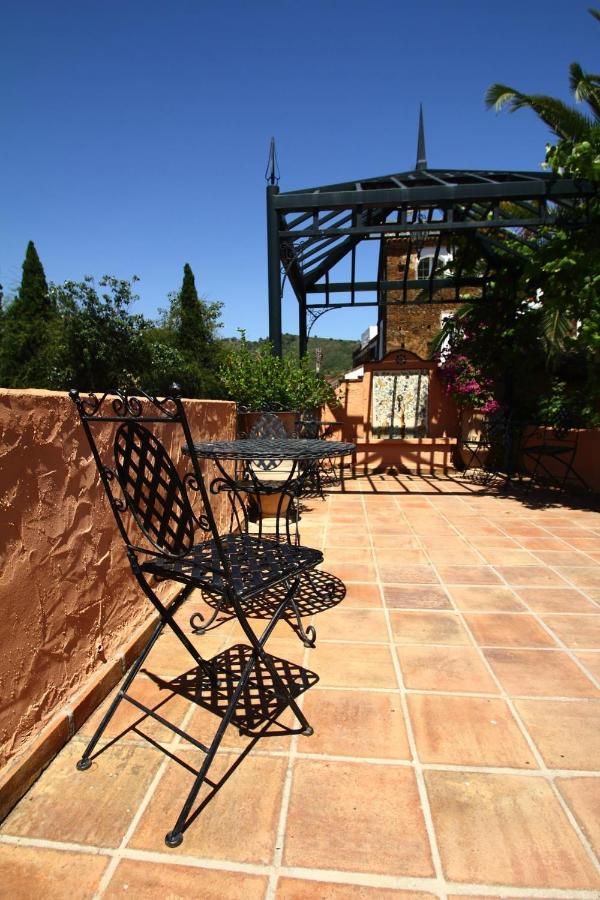
Amanhavis Hotel, Benahavis
Amanhavis Hotel pairs an outdoor pool and garden with a restaurant and bar in Benahavis. Room views vary, while a 24-hour front desk, airport shuttle and in-room tea and coffee facilities add…
Read hotel guideThe art of finding somewhere wonderful.
Video by Nirjhar Basak on Pexels
Benahavís is best approached through the traces of a fortified landscape. Its recorded heritage reaches beyond individual buildings to a network of towers and strongholds whose positions made sense in relation to routes between the coast and the interior. These remains offer a more layered picture of the municipality than any single monument could: one shaped by strategic outlook, difficult terrain and settlements that have changed or disappeared.
The most commanding landmark in this story is Castillo de Montemayor. Set on a high, roughly pyramidal mountain near the Sierra Palmitera, it stands at 579 metres above sea level, on the divide between the Guadalmansa and Guadalmina rivers. The castle’s elevated position gave it a broad field of view, while the steep mountain profile helped protect its approach. A signposted route leads to the fortress from the town centre, bringing the relationship between settlement, mountain and defensive site into focus.
Within the stronghold, the surviving plan includes two enclosures of thick masonry walls and square towers. Several cisterns attest to the practical demands of holding a fortified site; one, set inside a tower, has two connected chambers at different levels. Montemayor’s history also belongs to a wider network. Its location links it geographically with the castles of El Nicio, Estepona and Marbella, while its form has been compared with the fortress at Archidona.
Other defensive remains tell a less monumental, more fragmentary story. Torre Esteril, Torre de la Lechera and Torre de Campanillas are associated with a system of strategically placed towers, understood as part of a medieval defensive tradition concerned with access between the coast and inland territory. Their recorded descriptions point to very different structures and settings, but together they suggest how watch and protection could be distributed across the landscape rather than concentrated in a single castle.
The remains of Torre Tramores broaden the picture from defence to settlement. Historical accounts place Benahavís, Daidín, Atramores or Tramores and Montemayor among the area’s named places from the fifteenth century. Tramores is identified as a fortified settlement distinct from Benahavís; it appears in late-fifteenth-century records and was later described as a village before being noted as abandoned and ruined. Its surviving architectural traces, including part of a tower, give substance to that history of a once-inhabited place.
For visitors, Benahavís’s strongest sense of place lies in reading these remains together: the high fortress, the scattered towers and the evidence of settlements that no longer endure as they once did. The result is a landscape whose interest rests not only in what survives, but in the connections between its heights, waterways and past communities.
Amanhavis Hotel pairs an outdoor pool and garden with a restaurant and bar in Benahavis. Room views vary, while a 24-hour front desk, airport shuttle and in-room tea and coffee facilities add…
Read hotel guide