Bérchules is best understood through the relationship between its settlements, steep terrain and carefully managed water. The heritage record brings together the parish church of San Juan Bautista, the remains at Tajo del Reyecillo, a historic flour mill and the Acequia Nueva. Together, they offer a close-grained account of life shaped by the land rather than by a single monument.
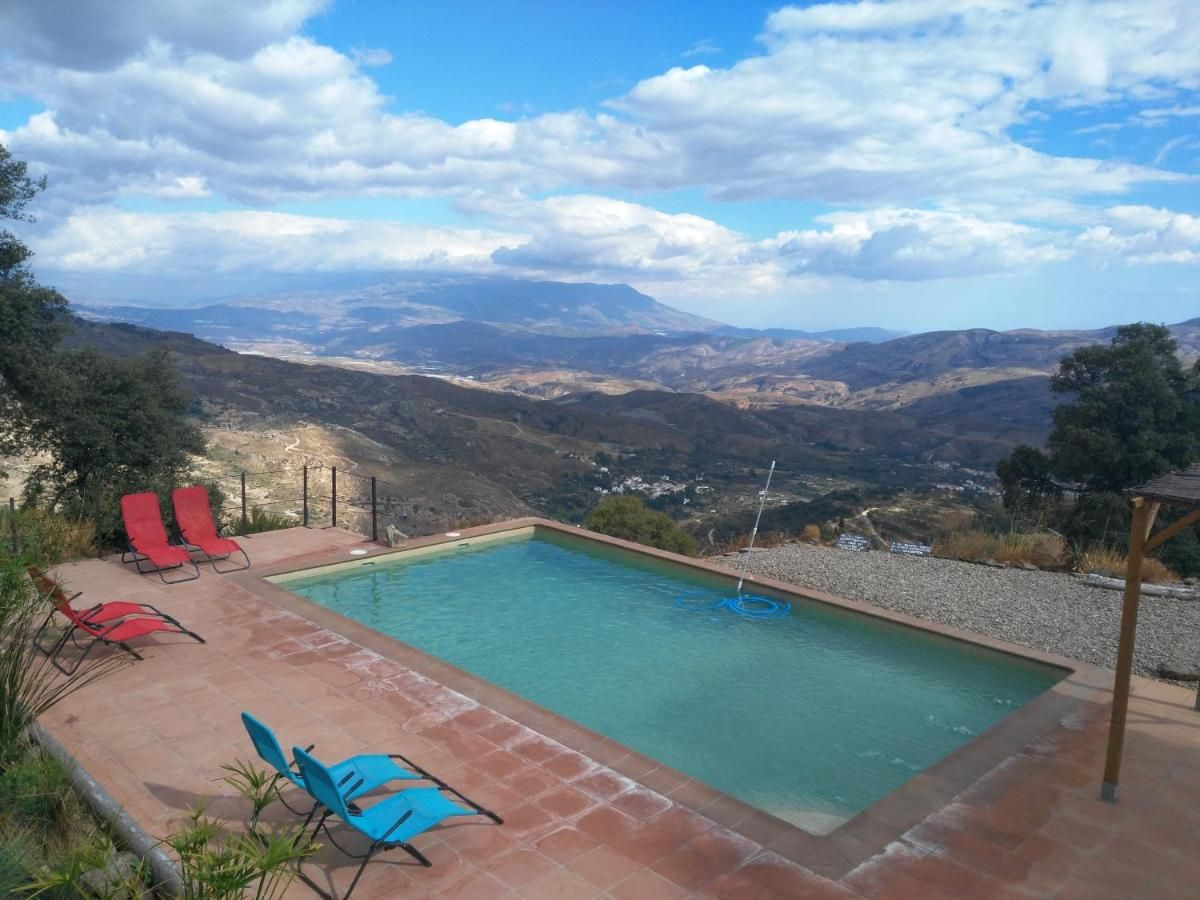
The settlement landscape includes Bérchules and nearby Alcútar, as well as terraces cultivated around the built-up areas. In Alcútar, compact groups of houses follow the slope in stepped formation, while paths and dispersed buildings meet fields and terraces. The recorded landscape describes a network of water channels, branches, fountains and retaining features associated with the use of land and water. It is a setting in which the pattern of cultivation and the form of the settlement belong to the same story.
Water, slope and the cultivated landscape
Acequia Nueva makes that relationship especially tangible. Its course runs for just under four kilometres, from its intake to its passage beyond Alcútar, and descends from about 1,650 metres to 1,150 metres over that distance. The account describes sections cut into rock, stretches that pass beneath Bérchules, and a largely earthen channel along the later part of its route. Its changing construction reflects the demands of a sharply sloping landscape and the practical work of carrying water through it.
At Tajo del Reyecillo, a steep-sided hill retains traces of a masonry wall on its gentler south-eastern slope. The remains are much deteriorated; the proposed interpretation is that they may have belonged to a refuge built during the Morisco uprising of the sixteenth century. That uncertainty is part of the site’s story: what can be seen is limited, while its possible historical meaning remains cautious rather than definitive.
A church and a working past
The sixteenth-century church of San Juan Bautista is a landmark with a strong local identity. Its Mudéjar structure has three naves, with a timber framework over the central one and vaulting in the side aisles. Brick portals preserve some of the building’s oldest features. The church was burnt during the Morisco rebellion; in 1595, the carpenter Juan Alonso rebuilt its roof structure. Its tower is described as a visual point of reference in the surrounding territory.
Another small but distinctive piece of local heritage is the Molino de la Carraca. This flour mill has a mill chamber, a water channel and a vertical shaft; its unusual channel is shaped like a half T and accommodated two mill wheels. Stone, earth, lime mortar and slate describe a building closely attuned to local materials. In Bérchules, the enduring interest lies in these connected details: settlement, water, cultivation and architecture, each revealing a different way of inhabiting the same demanding terrain.