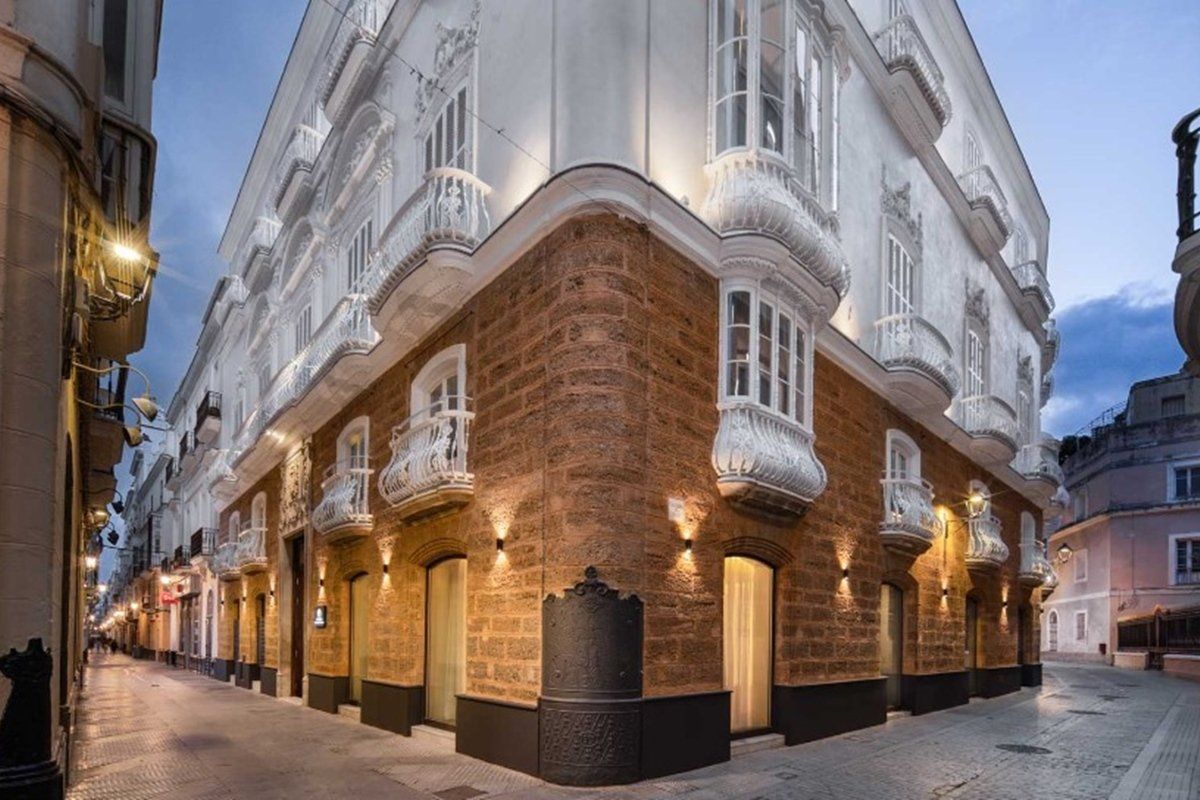
Cádiz reveals its character through the buildings that line its streets and gather around its squares. Behind the historic centre’s façades, courtyards, galleries and stairways show how domestic life was arranged; churches and civic buildings, meanwhile, offer a striking variety of architectural forms within the city itself.
Courtyards and city houses
On Calle Ancha, the Palacio de Mora is a fine example of the nineteenth-century Isabelline townhouse. Its grand façade sits within the existing street pattern, while inside, rooms turn around two patios and a garden. A distinctive arrangement separated summer and winter quarters, linked by an imperial staircase; the house also has the mirador characteristic of Cádiz homes.
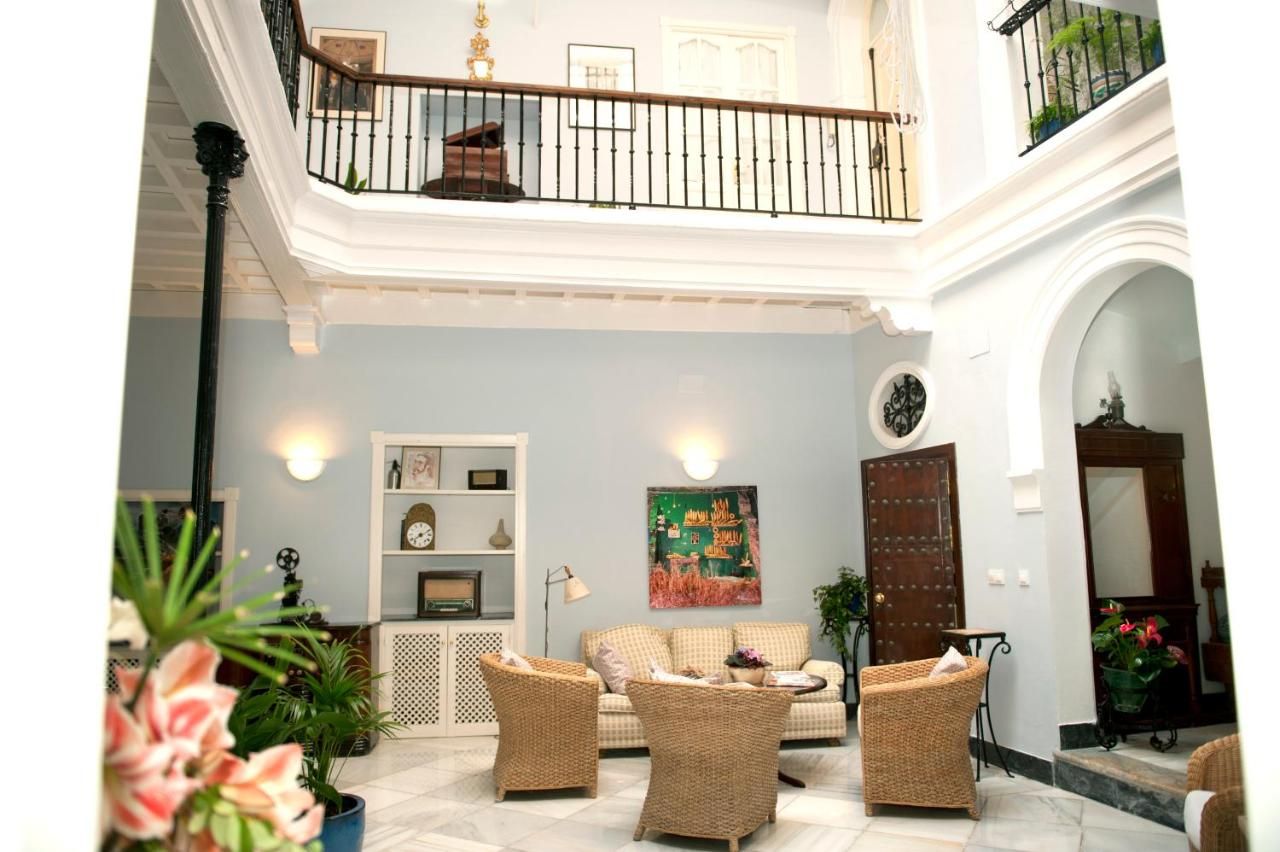
Other houses tell different stories of urban architecture. The eighteenth-century Casa Lasquetty is distinguished by its white Italian-marble doorway, a square courtyard with Tuscan columns and a monumental staircase. The Casa del Almirante, in the historic Pópulo quarter, is organised around a courtyard whose galleries rest on reddish marble columns brought from Genoa. At the Casa de las Cinco Torres, five separate houses share a carefully repeated façade once set as a screen against the sea.
Churches, civic spaces and the shore
The city’s religious architecture ranges from the late-eighteenth-century neoclassical church of San José, with its three naves and prominent dome, to the Oratorio de la Santa Cueva. The latter brings together two contrasting chapels: a more austere underground space and a richly lit upper chapel, linked by staircases and conceived in distinct styles.
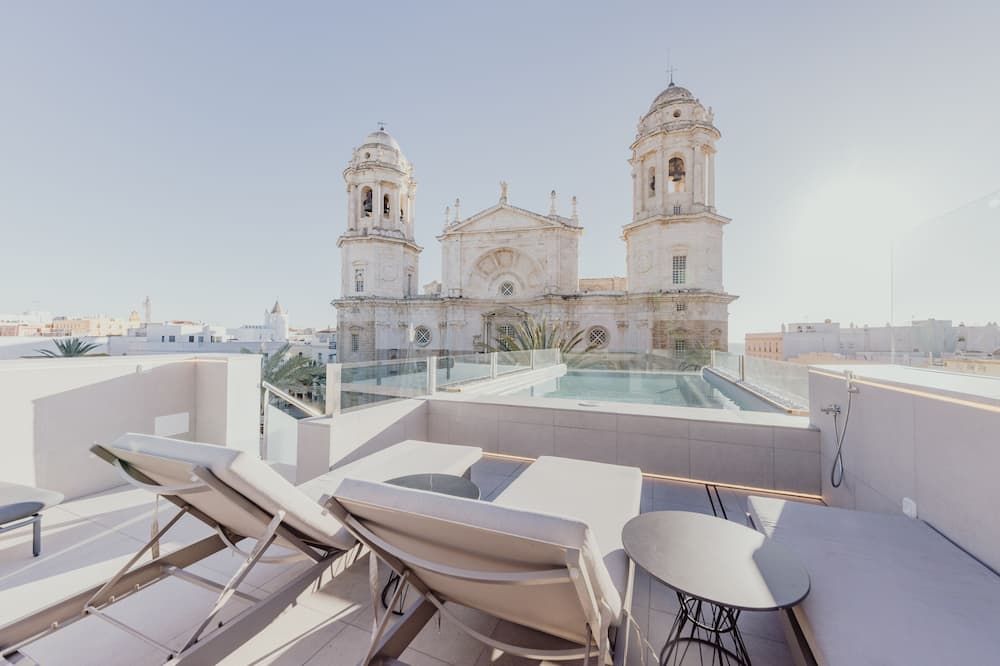
At the Cathedral of Santa Cruz, coloured marbles and jaspers shape the interior, while the main façade is framed by two towers. The older cathedral has a different history: much of its present appearance followed rebuilding after the English assault of 1596. In the Pópulo, the Arco de los Blancos preserves the outline of a city-wall gateway whose origins are traced to Cádiz’s ancient Roman wall.
For a change of scale, the Mercado de Abastos is organised around galleries and a central space, with a separate fish-market section. At the shore, the Balneario de Nuestra Señora de la Palma y del Real stands on slender pillars in the beach, its semicircular plan linking to the street by a footbridge. Together, these places make Cádiz especially rewarding for travellers who enjoy reading a city through the detail of its buildings and public spaces.