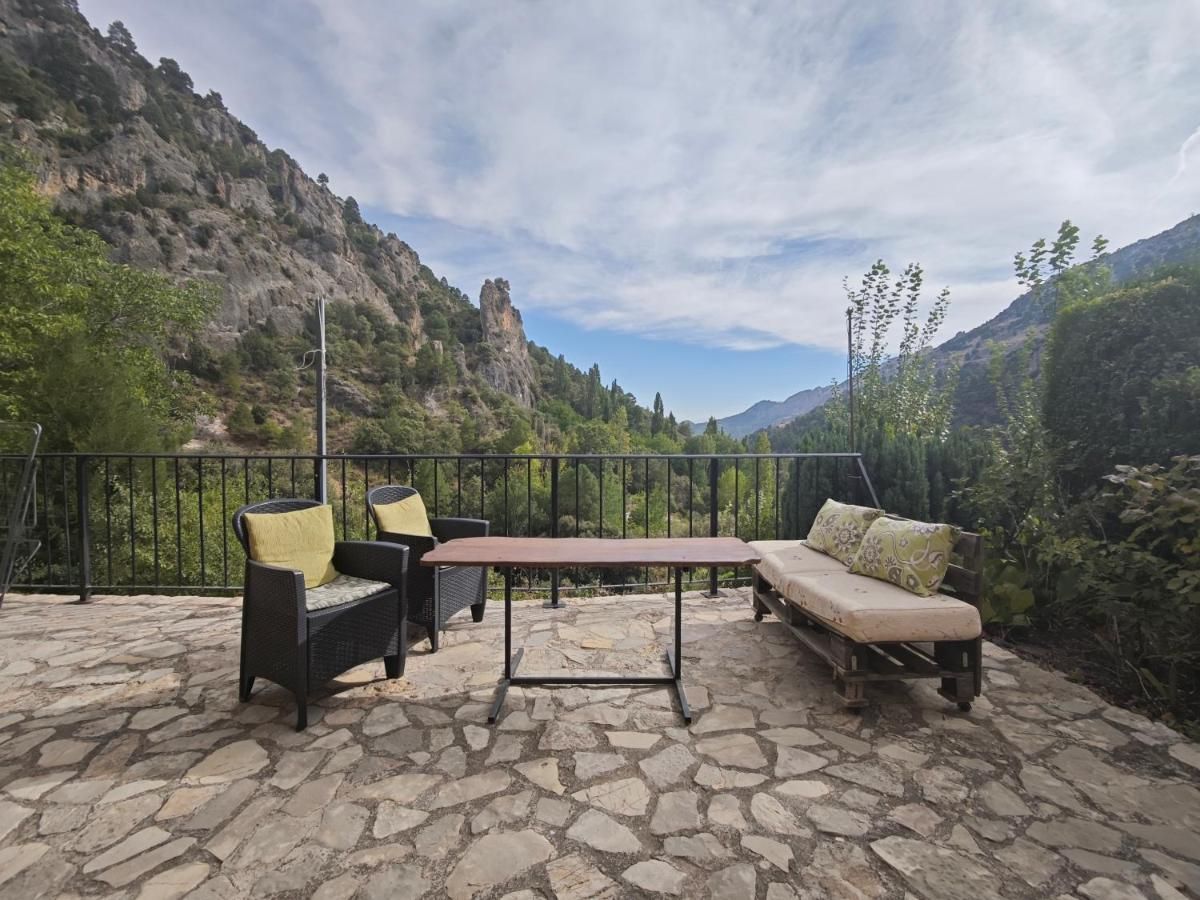
Castril is a town shaped by its ground. Its old centre forms a half-circle on a west-facing slope above the Río Castril, with the river curving along its western edge. The settlement rises from cultivated terraces towards the steep-sided Peña, and its streets follow the contours rather than a regular plan. Narrow, winding lanes and pronounced changes in level give the historic centre a distinctly close-grained character: here, the shape of the town is inseparable from the terrain beneath it.
The Peña also explains Castril’s strategic importance. In the medieval period, the Guadiana Menor corridor connected Baza and Guadix with the highlands of Andalucía, making control of this route significant during conflicts between Christian and Nasrid forces. Castril’s castle, of Almohad origin, occupied a commanding position above the river gorge and formed part of a wider defensive system. Its surviving remains include sections of walls and towers fitted to the rocky contours; the site’s history is one of repeated contest on a frontier that changed hands before the town was definitively taken by the Catholic Monarchs in 1488.
Streets, church and layered heritage
In the centre, the parish church of Nuestra Señora de los Ángeles offers a different expression of Castril’s past. The sixteenth-century building has three naves, a central dome and a bell tower beside the chancel. Its Renaissance stone portals bring particular detail to an otherwise restrained exterior, while the interior combines limewashed surfaces with painted architectural features. The church’s later additions reflect how historic buildings continued to evolve: its choir and a side chapel date from the nineteenth century.
Ordinary buildings contribute to the town’s character, too. Whitewashed façades, tiled roofs, balconies and ironwork sit within streets that climb and twist with the slope. The contrast between the compact lanes and the open prospect of the river’s cut landscape is one of Castril’s defining features. Nearby heritage records also describe water-powered flour mills supplied by the Acequia de la Solana. Their channels, elevated watercourses and mill structures show how water was harnessed for work as well as shaping the surrounding landscape; one mill continued operating until 1992.
A landscape with a long human story
Archaeological finds across the municipality point to human presence over a long span of time, including prehistoric, Roman and medieval material. At the hill south of the centre, remains and artefacts range across several periods, while fragments of a wall may belong to the Almohad castle. These traces add depth to the view from the town: Castril’s dramatic setting is not simply a backdrop, but part of the reason its strategic and settled history unfolded here.
To understand Castril, look both up and down: towards the Peña and its fortifications, then back through the steep lanes to the river below. The relationship between rock, water, streets and surviving buildings gives this small Granada municipality a strong, unmistakable sense of place.