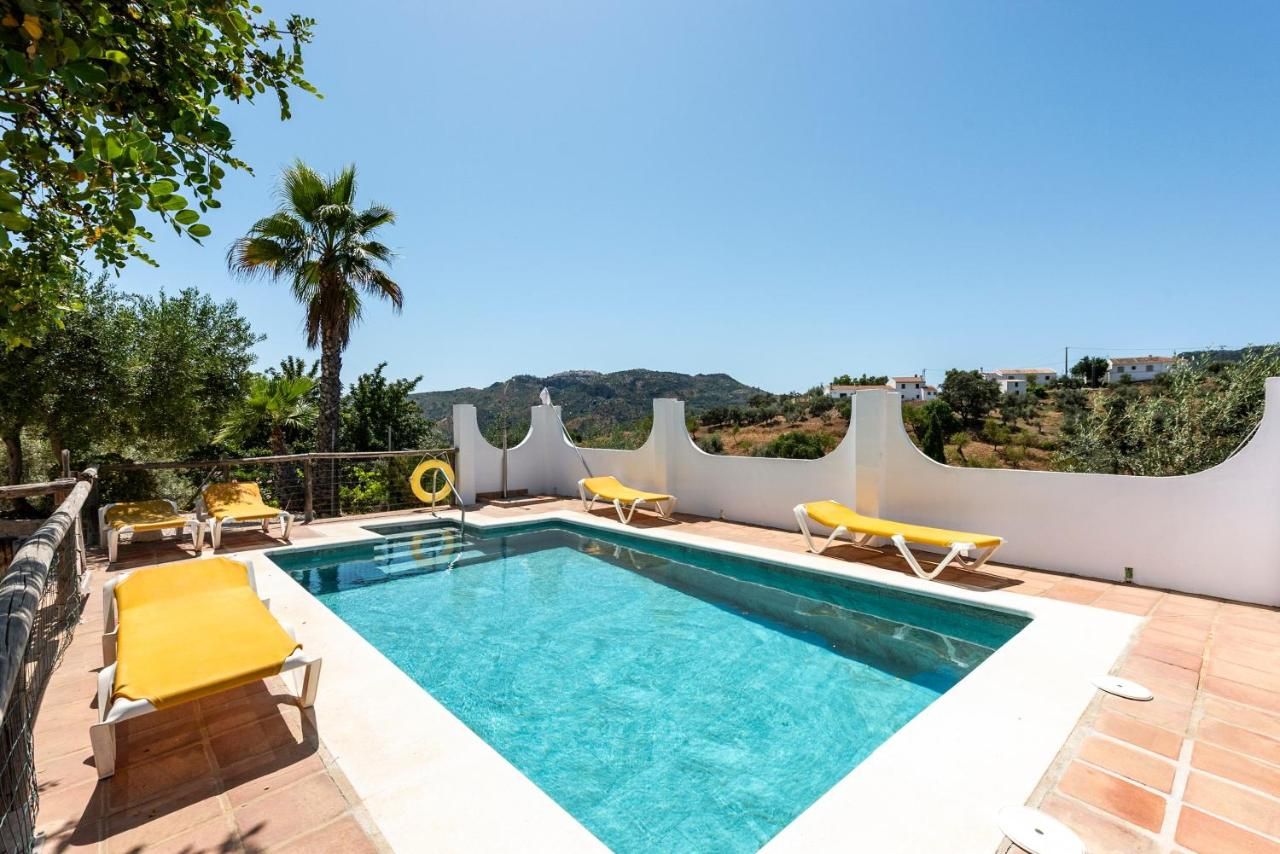
La Casita del Garrobo, Comares
With a private pool, garden, terrace and well-equipped kitchen, La Casita del Garrobo offers an independent base in Comares. Its self-catering comforts suit a stay shaped around time at home and the…
Read hotel guideThe art of finding somewhere wonderful.
Video by Nirjhar Basak on Pexels
Comares is a place to read through the layers of its built fabric: a church raised over an earlier mosque, traces of a medieval fortress woven into the present town, and waterworks that speak of settlement on the surrounding heights. Its heritage is not gathered into one perfectly preserved monument. Instead, it offers a more intricate story, in which surviving structures and fragments illuminate how the place was shaped and inhabited.
The remains associated with Comares Castle are dispersed and altered. The Arabic-period fortress is partly destroyed and has been obscured by later construction; two towers, known as Tahona Grande and Tahona Chica, and scattered sections of wall are among the surviving witnesses. The castle’s former enclosure was transformed when its site became the town cemetery. The available evidence also points to a wider defensive circuit: a surviving stretch of wall beside Calle Agua and the reference to a lost Málaga Gate suggest that fortifications once extended around the modern town centre. The exact form of the later medieval stronghold, however, is not established.
That uncertainty is part of the story rather than a reason to imagine a complete castle. What remains invites attention to the way history can persist in fragments, street lines and place-names, even after the original structures have been substantially changed.
At the highest and most central part of the historic centre stands the Church of Nuestra Señora de la Encarnación, whose rooflines, tower and chapel stand out above the surrounding houses. It was founded in 1505 on the site of the former mosque, and was originally built in the Mudéjar style. Its three naves are divided by cruciform pillars and pointed arches; above the central nave, a timber roof carries intricate geometric decoration, including stars and interlaced patterns. The church brings together a change in religious use and a distinctive architectural language, making it an especially revealing part of Comares’s historic fabric.
The domestic buildings recorded in the town add another scale to that history. Their descriptions preserve details of patios, internal courtyards, kitchens, working spaces and simple construction: masonry walls, timber-and-board ceilings, tiled floors and roofs supported by traditional timber structures. These are not grand monuments, but they help convey how houses accommodated daily life and household work.
Beyond the town centre, the remains at Marmullas are identified as a medieval Mozarabic settlement, dated broadly from the ninth to twelfth centuries. Domestic and water-related structures survive there, including a cistern; the surrounding area is recorded as cultivated with olives and almonds. Nearby, the Aljibe de Mazmullar preserves a strikingly elaborate example of water storage: a rectangular cistern divided into nine compartments by cruciform supports and horseshoe arches.
Together, these places make Comares more than a collection of isolated ruins. They reveal a landscape in which settlement, defence, architecture and the careful storage of water are closely connected, while leaving room for the uncertainties that still surround parts of its past.
With a private pool, garden, terrace and well-equipped kitchen, La Casita del Garrobo offers an independent base in Comares. Its self-catering comforts suit a stay shaped around time at home and the…
Read hotel guide