The Cozy Home, Gibraleón
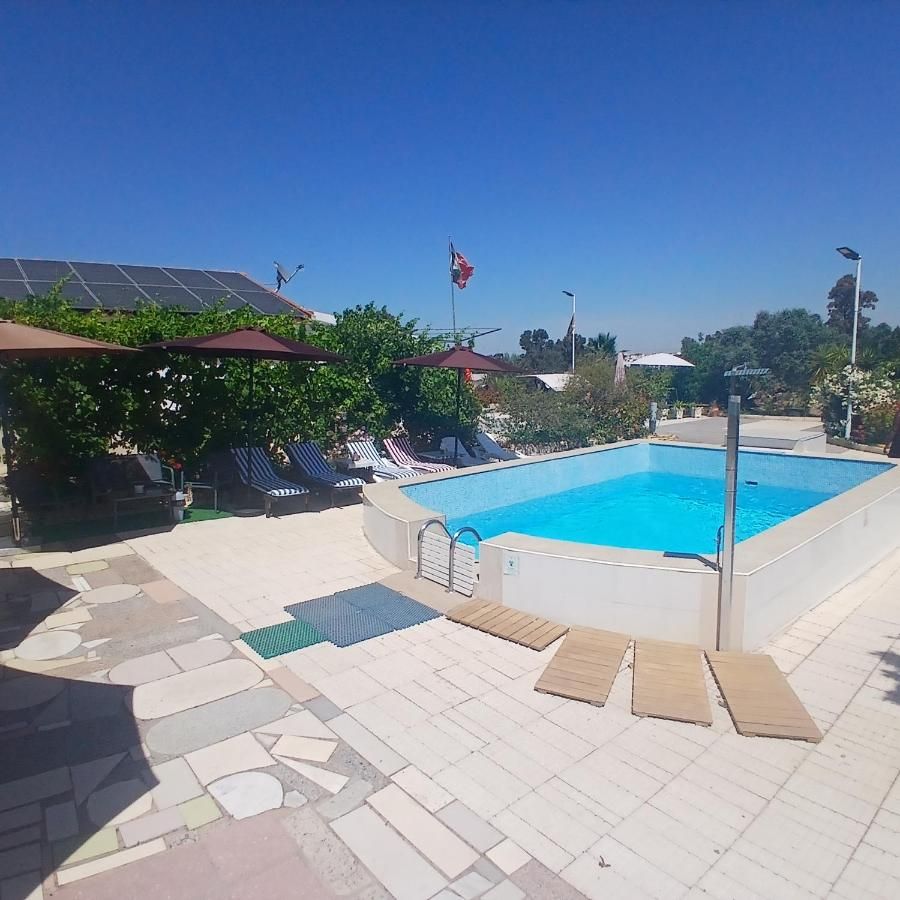
The Cozy Home pairs a ground-floor stay in Gibraleón with a kitchen, garden and outdoor pool with a view. Free parking, accessible parking and laundry facilities add practical independence, while the town’s…
Read hotel guideThe art of finding somewhere wonderful.
Video by Nirjhar Basak on Pexels
Gibraleón’s heritage is closely tied to the Odiel and to the routes that crossed its waters. The town’s archaeological and architectural record brings together a strategic riverside stronghold, religious buildings with markedly different forms, and traces of industry and transport. Rather than a single monument telling the whole story, these places reveal changing uses of the landscape over many centuries.
The Castillo and Murallas de Gibraleón occupy a small rise of reddish, marine-fluvial earth on the river’s left bank. The walled enclosure covers just under five hectares, overlooking a ford and the marshland below. Its position gives the remains a clear defensive logic: the river crossing and wetland lay in view, while the open countryside stretched behind the settlement.
The archaeological zone includes the outer wall and the site of the Palace of the Dukes of Béjar. The best-preserved visible stretch of the fortification is to the north, where two square towers and sections of wall remain standing. Other surviving fragments can be seen to the west and south. Much of the construction used rammed earth, with stone blocks and alternating brick courses also present in the northern walls. These varied remains make the site more than a single castle outline: they suggest a fortified precinct with distinct areas and changing levels.
Religious architecture offers another way into Gibraleón’s past. The church of the former convent of Nuestra Señora del Vado is the surviving part of a complex founded by the Dukes of Béjar in 1587. Its single rectangular nave, Mudéjar timber roof and domed main chapel reflect a building shaped by different architectural traditions. The convent was originally occupied by the Dominican Order and was once among the town’s most significant architectural ensembles.
The church of Nuestra Señora del Carmen has a different character. Its brick entrance, with a late-Gothic pointed arch and Mudéjar design, is dated to around 1500. The building was once the chapel of a Carmelite convent founded in 1331; its interior, by contrast, is now described as simple and neoclassical. The contrast between its entrance and later interior lends the small church a layered history.
For a striking change of scale and style, the 1933 Chalet Plus Ultra turns towards modern architecture. Set in an agricultural setting outside Gibraleón, its crisp volumes and nautical references evoke the expressive architecture of its period. Together, these buildings reward attention to detail: Gibraleón’s character emerges not from one uniform style, but from the distinct histories written into its walls.
The Cozy Home pairs a ground-floor stay in Gibraleón with a kitchen, garden and outdoor pool with a view. Free parking, accessible parking and laundry facilities add practical independence, while the town’s…
Read hotel guide