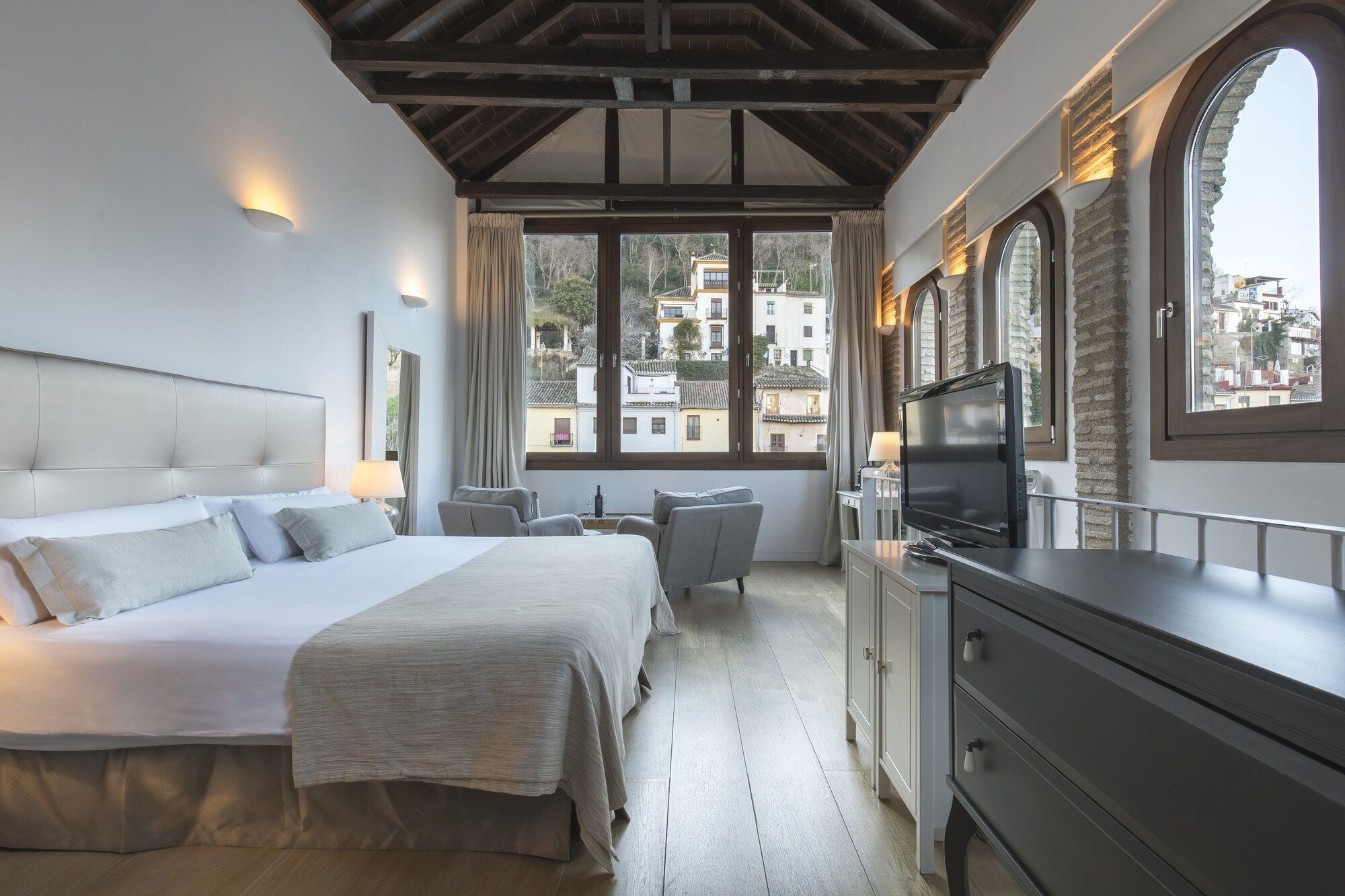
Shine Albayzín Hotel, Granada
A three-star Granada hotel on Carrera del Darro, Shine Albayzín pairs round-the-clock reception with family rooms, lift access and a range of room features. Its address places the stay in the context…
Read hotel guideThe art of finding somewhere wonderful.
Video by Nirjhar Basak on Pexels
Granada is a city of interwoven histories, best understood through the changing character of its streets and neighbourhoods. On the hill, the Alhambra gathers palaces, gardens and fortifications into a remarkable royal complex; across the Darro, the Albaicín preserves the winding urban fabric of an older city. Between them, lanes, squares and gardens reveal how Granada’s story continued to evolve.
The Carrera del Darro follows the river between Plaza Nueva and the Paseo de los Tristes, a route where the city’s historic relationship with water remains close at hand. The Albaicín rises beyond it: once a collection of distinct urban nuclei, the neighbourhood gradually acquired its present unity. Its streets, squares, surviving walls and gates carry traces of successive periods, including Zirid and Nasrid fortifications. Among the details that give this hillside quarter its character are preserved cisterns, once built to serve homes and places of worship, and the Bañuelo, an eleventh-century bath with vaulted rooms and star-shaped roof openings.
Granada’s domestic architecture offers another way into its past. The cármenes of the Albaicín, Realejo and Alhambra surroundings combine enclosed gardens, orchards and houses behind high walls. At the Casa morisca Horno de Oro, a late-fifteenth-century house shaped by later changes, a secluded façade opens onto a courtyard with a central pool and arcaded sides. These intimate spaces make a striking counterpoint to the monumental scale of the nearby palaces.
The Alhambra occupies the Sabika hill above the Darro. Its history reaches back to an early fortress, but its monumental form took shape under the Nasrid rulers, particularly in the thirteenth and fourteenth centuries. The complex brings together the Alcazaba, the Nasrid Palaces and the Generalife, alongside later Christian buildings including the Palace of Charles V. The contrast is especially clear in that palace: its imposing square exterior encloses a circular courtyard, a distinctive Renaissance design.
Within the Nasrid Palaces, courtyards and galleries connect spaces once used for government and royal life. Beyond them, the Generalife’s gardens and water channels recall its role as a country residence, with surrounding orchards once supplying the kitchens of the Alhambra. The hill is not a single architectural moment but a succession of uses and styles, from defensive walls and intricate Nasrid decoration to later churches and palaces.
Below the hill, the city centre tells a different story. Plaza Bib-Rambla has served as a setting for public celebrations, markets and other gatherings; its central fountain remains a focal point. Nearby, the Alcaicería occupies the site of Granada’s historic silk bazaar. The original market was destroyed by fire in 1843, and today’s neo-Moorish reconstruction houses shops selling souvenirs and traditional crafts.
Granada’s heritage also includes places shaped by religious and civic life after the Nasrid period. The Monastery of San Jerónimo, begun in 1492 and completed in 1547, is distinguished by its Renaissance decoration and the tomb of Gonzalo Fernández de Córdoba. Elsewhere, the city’s flamenco tradition is closely associated with Sacromonte, whose cave houses and history of Roma settlement form a distinctive part of Granada’s cultural landscape. Taken together, these different quarters make the city feel less like a collection of monuments than a place where architecture, memory and everyday urban life continually meet.
A three-star Granada hotel on Carrera del Darro, Shine Albayzín pairs round-the-clock reception with family rooms, lift access and a range of room features. Its address places the stay in the context…
Read hotel guide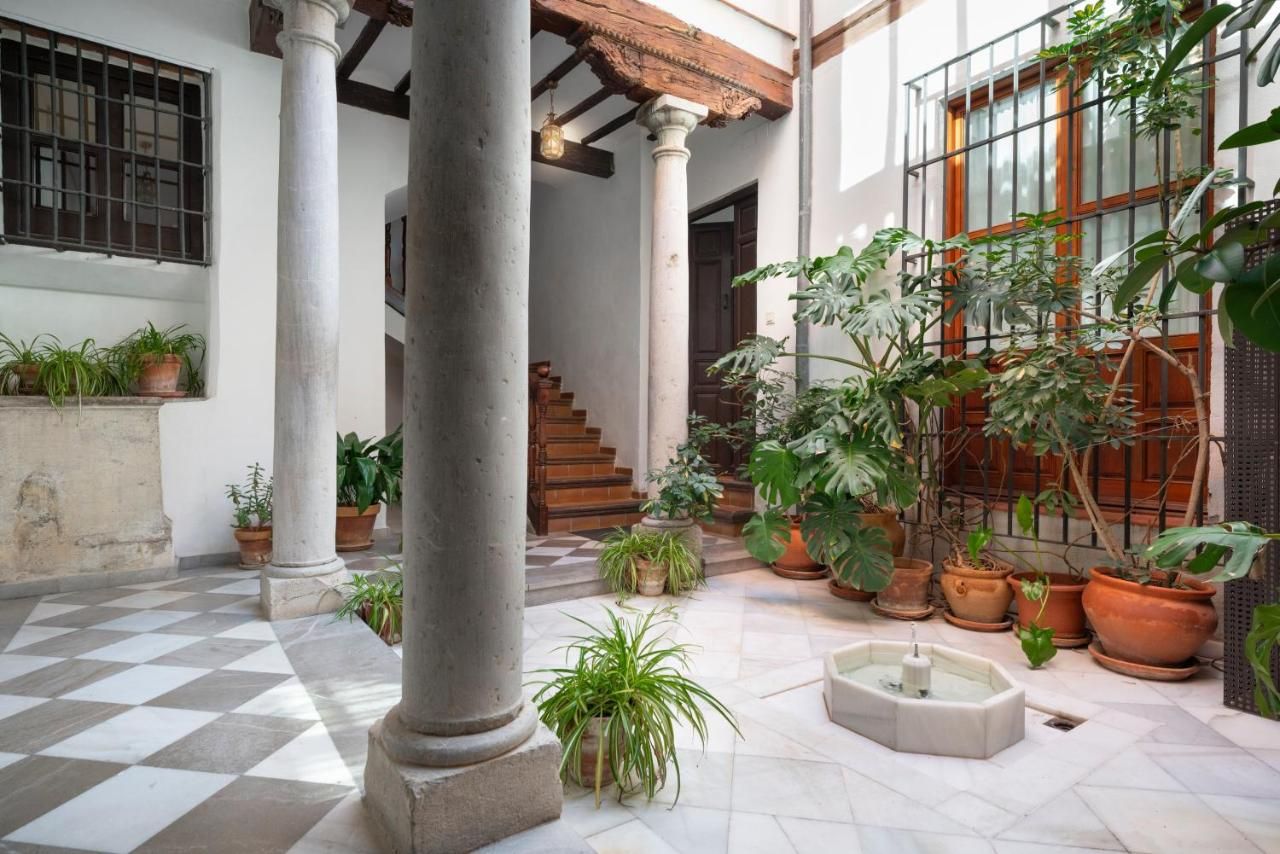
A private Granada stay in the Albaicín pairs balconies described as overlooking the Alhambra with a kitchen, dining space and laundry facilities. Its appeal lies in independence and an unusually strong city…
Read hotel guide
Universal is a three-star Granada hotel with 24-hour reception, on-site dining, family rooms and meeting facilities. Free Wi-Fi, lift access and practical room amenities support both short city breaks and business visits.
Read hotel guide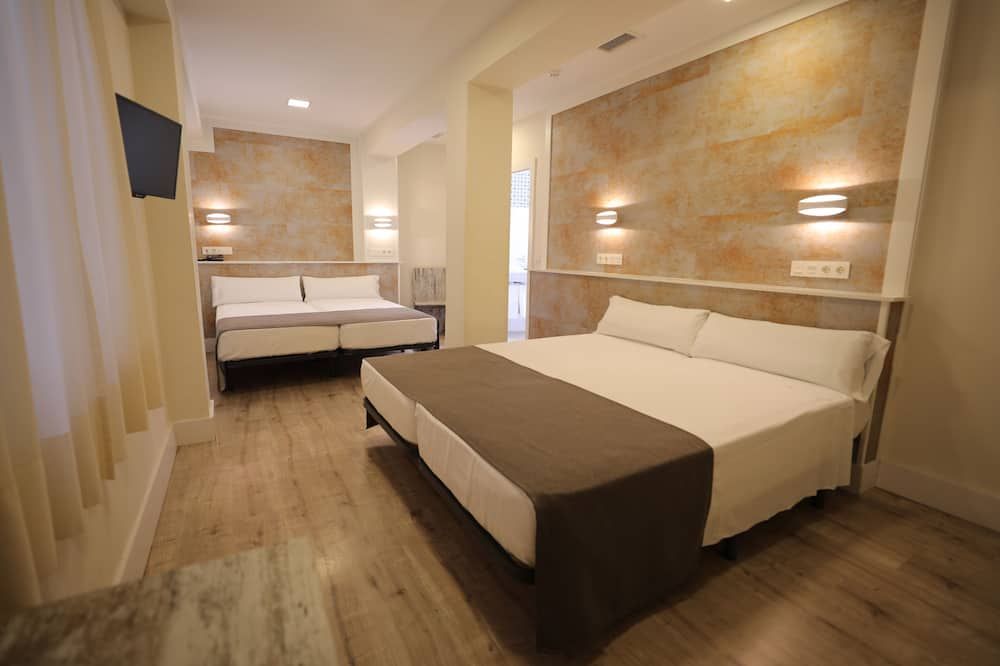
Yit Casablanca is a three-star Granada hotel with 24-hour reception and security, soundproofing, family rooms and private parking. Practical services and a tour desk make it a considered option for visitors balancing…
Read hotel guide