
Nazaret De Moguer
With a pool, hot tub, garden and family-friendly facilities, Nazaret De Moguer offers a flexible hotel stay at a rural Moguer address. Accessibility features and practical services add useful detail, while the…
Read hotel guideThe art of finding somewhere wonderful.
Video by Nirjhar Basak on Pexels
Moguer’s history is unusually tangible in its buildings. The town’s heritage ranges from a medieval stronghold to convent architecture and the houses associated with its best-known literary figure, Juan Ramón Jiménez. Rather than telling a single, simple story, these landmarks show how Moguer’s civic and religious life changed over the centuries.
On a small rise at the highest part of the town stands the Castillo de Moguer, documented from 1362 and possibly older. It served as a defence for the population and port, and as a temporary residence of the Portocarrero lords. Its compact, imperfectly square plan has four projecting corner towers; the fortress is divided by Calle Amparo. The surviving fabric and its elevated position make the castle a striking reminder of Moguer’s medieval origins.
Religious buildings add other layers to the townscape. The Antiguo Monasterio de Santa Clara brings together a Gothic-Mudéjar church with architectural features from later periods, including Mudéjar cloisters, Renaissance arcades and Baroque portals. Its variety reflects a long history of building and adaptation rather than a single stylistic moment. The former Convento de San Francisco, founded in 1337–38, has endured substantial destruction; its church and cloister remain. The cloister’s two levels combine arcades, marble columns and timber ceilings, while blue glazed ceramic discs enliven the lower gallery.
Moguer’s civic architecture has its own distinctive landmark in the Ayuntamiento. Designed by Italian architect Tomás Bottani, its sober central courtyard is complemented by a neoclassical façade with a double loggia: two tiers of five semicircular arches supported by marble columns. The building’s design connects local civic identity with architectural influences brought from beyond the town.
Moguer is also closely associated with the poet Juan Ramón Jiménez. His birthplace, a nineteenth-century house on the corner of Calle Zenobia Camprubí and Calle de la Ribera, has a symmetrical historicist façade, balconies and a central patio. The Casa Museo de Zenobia y Juan Ramón Jiménez offers a different domestic setting: a two-storey house organised around a marble patio and cistern. Jiménez recalled living there with his family through his early years, and the house became the setting for memories that later informed his writing. Together, the two buildings make the poet’s connection to Moguer part of the town’s built fabric.
These landmarks reward a measured look at Moguer: a place where the outlines of a medieval fortress, layered religious architecture and intimate literary associations sit within the same urban story.
With a pool, hot tub, garden and family-friendly facilities, Nazaret De Moguer offers a flexible hotel stay at a rural Moguer address. Accessibility features and practical services add useful detail, while the…
Read hotel guide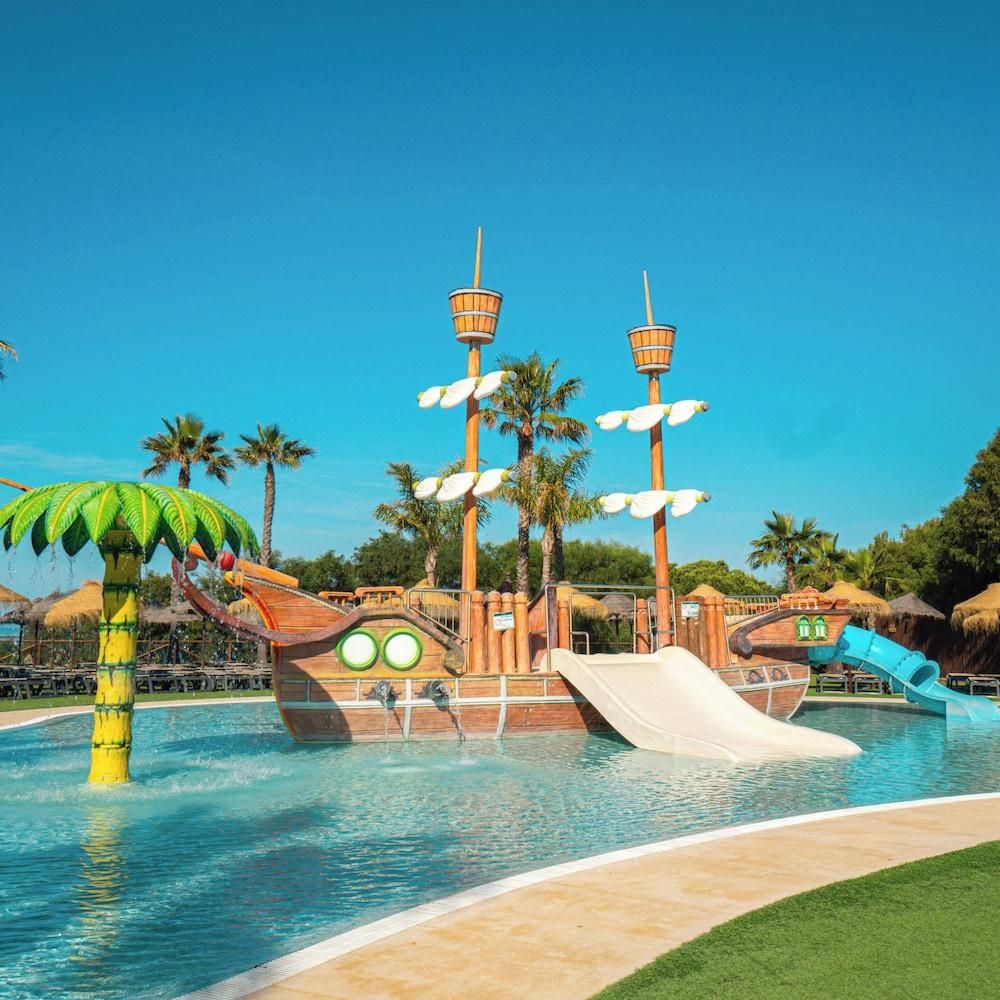
Ohtels Mazagon combines a restaurant, sauna, tennis, childcare and meeting facilities in a four-star Moguer hotel. Its range suits varied stays, with the municipality’s agricultural landscape and archaeological traces offering a richer…
Read hotel guide