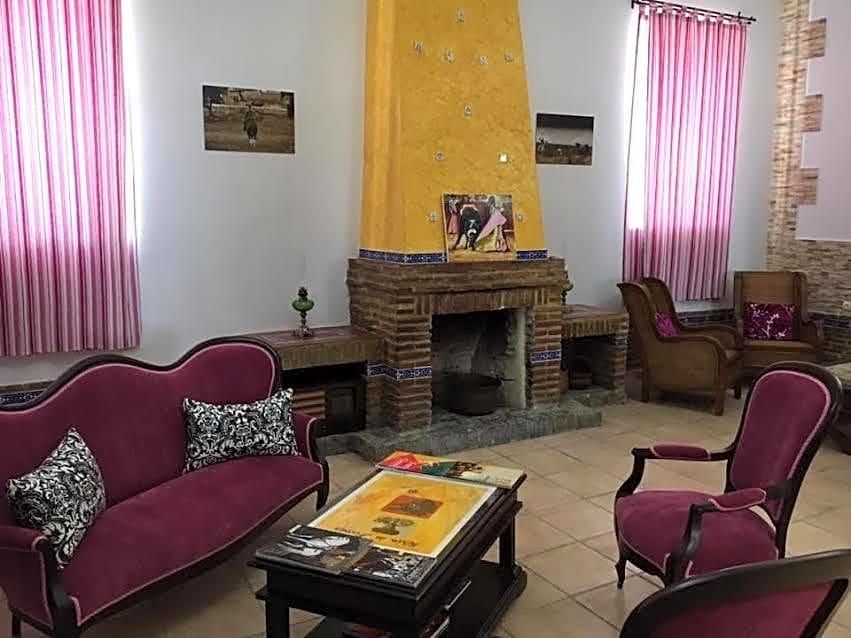
Hôtel Andalou, Montellano
With a restaurant, room service and a 24-hour front desk, Hôtel Andalou offers a service-led hotel stay in Montellano. Bicycle rental, a pool table and practical facilities add useful options, while local…
Read hotel guideThe art of finding somewhere wonderful.
Video by Nirjhar Basak on Pexels
Montellano’s history is not confined to a single monument. It emerges in a townscape of churches, domestic architecture and civic buildings, while the surrounding municipality preserves traces of settlement reaching back to prehistoric times. Together, these layers offer a more rewarding way to understand this Sevillian town than treating its heritage as a checklist.
The Fuente-Lavadero de Montellano brings practical and architectural history together. Its fountain is a hexagonal structure with sixteen spouts, stonework and a small pinnacle; beside it, the former wash-house has a broad, flat vaulted roof and three entrances framed by semicircular arches. The complex speaks of everyday civic infrastructure as well as careful design, with the fountain, trough and wash-house forming a connected ensemble.
Religious architecture provides another perspective on the town’s character. The Parroquia de San José has a Latin-cross plan, three naves and a sequence of chapels, with a dome over the crossing. The Parroquia de Nuestra Señora de las Virtudes is organised around a Greek-cross plan and has a tower built from brick, rammed earth and stone. Their different layouts and interior details make these churches distinct expressions of local religious heritage.
For a smaller-scale story, the Ermita del Cristo de los Remedios combines a chapel, a former hospital and a courtyard with a colonnade of round arches. The chapel was built in 1888 as a private foundation and later given to the church. Its simple account of a named benefactor and changing use adds a human dimension to the architectural record.
The wider landscape holds evidence of much earlier lives. At El Molino Pintado, remains on a plateau between the Salado and Dulce streams include material associated with prehistoric, Iberian and Roman periods; the Roman remains appear to have covered much of the higher ground. Other recorded sites tell different stories: Pancorvo has evidence of Bronze Age and later occupation, while Las Glorias is described as a group of burial mounds whose date remains uncertain. These are archaeological records, not a promise of visitor access, and their significance lies in the breadth of settlement history they reveal.
Montellano rewards attention to such contrasts: a fountain and wash-house shaped by communal needs, churches with markedly different plans, and archaeological traces spread across the municipality. Seen together, they give the town a distinctive historical texture, rooted in both its built centre and the much older landscape around it.
With a restaurant, room service and a 24-hour front desk, Hôtel Andalou offers a service-led hotel stay in Montellano. Bicycle rental, a pool table and practical facilities add useful options, while local…
Read hotel guide