Hotel Don Gonzalo, Montilla
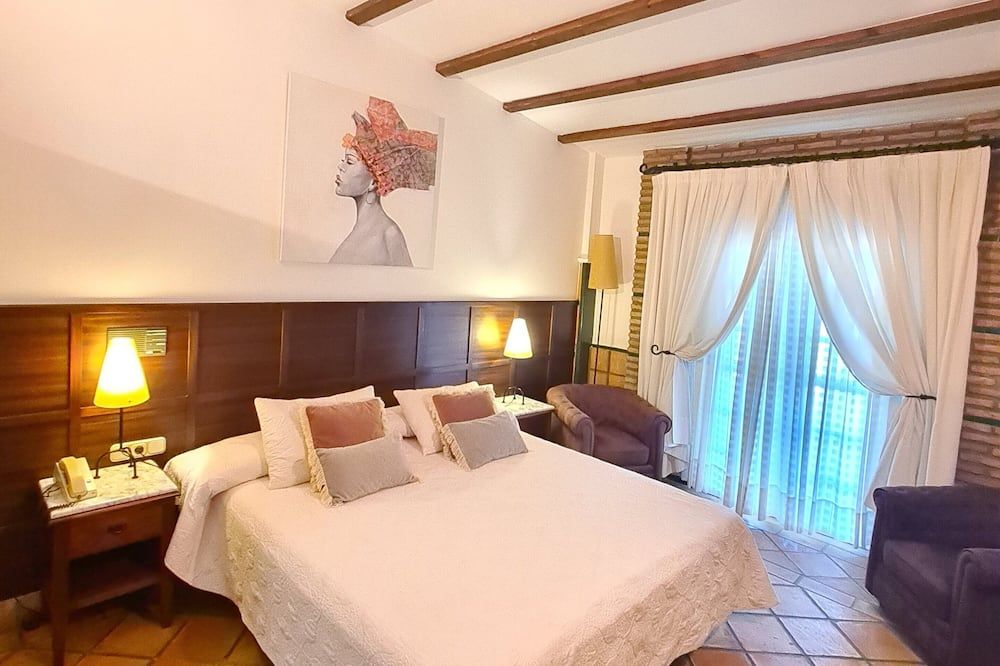
Hotel Don Gonzalo pairs a pool with a view and a separate children’s pool with on-site dining, free parking and event facilities. Its full-service offer makes it a versatile base for a…
Read hotel guideThe art of finding somewhere wonderful.
Video by Nirjhar Basak on Pexels
Montilla’s heritage is best read through its buildings: churches, convents, houses and working structures that preserve very different chapters of the town’s past. The contrast is especially clear between the oldest ground around the parish church of Santiago Apóstol and the more spacious setting of the former ducal palace. Together, these places offer a locally grounded way to explore Montilla without reducing it to a single monument or period.
The Iglesia de Santiago Apóstol occupies the town’s highest and oldest area, close to the site of the former castle of the House of Aguilar. Its history reaches back through successive principal churches: the heritage record notes a possible mosque converted to Christian worship in 1240, followed by a Gothic-Mudéjar church of the sixteenth century and later alterations that shaped its present appearance. Inside, three naves and a transept retain evidence of those changing architectural phases.
Another striking religious landmark is the Convento de Santa Clara, founded in 1512. Its arrangement of courtyards, galleries and church reflects a recognisably Andalusian convent tradition, while the church’s Mudéjar-influenced timber ceilings and carved stone entrance give the complex a distinctive material character. The former convent of San Lorenzo, also founded in 1512, survives differently: its enclosure and monumental stone entrance recall the original religious complex, while a large former irrigation basin remains within the grounds.
Montilla’s smaller chapels add further detail. The Ermita de San José began in the first half of the sixteenth century and was enlarged around 1703; the Ermita de la Rosa, begun with contributions from local people, was completed in 1763. At the Llanete de la Cruz, an iron cross on a stone pedestal marks a civic space associated with local celebrations, including the Fiesta de la Cruz and the Candelá de San Sebastián.
Domestic architecture tells another part of the story. The Casa del Inca Garcilaso, a sixteenth-century house with a restrained stone façade and an iron balcony, is associated with Alonso de Vargas, uncle and protector of the Inca Garcilaso. It now houses the municipal library. The Casa Solariega de Alvear, built for the mariner Diego de Alvear in the late eighteenth century, is more formally neoclassical, with a two-storey courtyard and an imperial staircase. The Palacio de los Duques de Medinaceli, built between the sixteenth and seventeenth centuries, stands in the lower part of the old town; it is privately owned and not open to visitors.
Beyond the principal monuments, Montilla’s heritage includes working and everyday structures: a historic cooperage, an early twentieth-century flour mill, and inland saltworks arranged across a hillside. These records offer a glimpse of practical life as well as architectural ambition. For a quieter, more outward-looking perspective, the old Fuente de los Zapateros is documented from the sixteenth century, while Fuente Rodas forms a lagoon-like water feature near the municipal boundary with La Rambla.
Hotel Don Gonzalo pairs a pool with a view and a separate children’s pool with on-site dining, free parking and event facilities. Its full-service offer makes it a versatile base for a…
Read hotel guide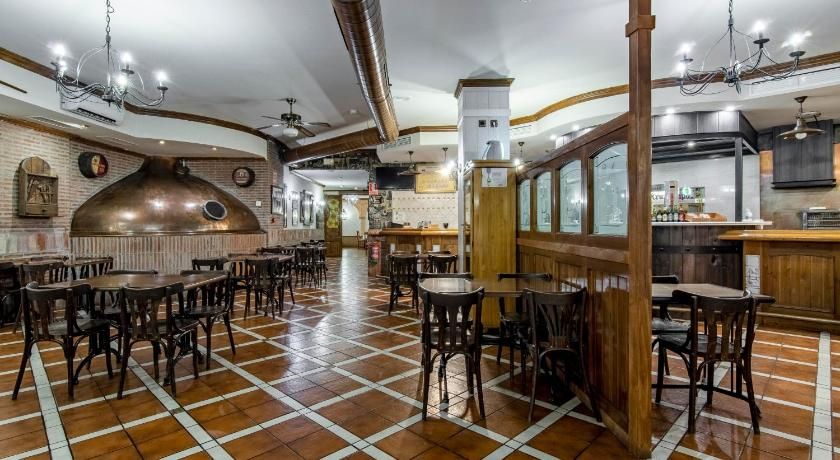
Hotel Don Ramiro combines a restaurant and bar with business facilities, family provisions and a notable range of accessibility features. In Montilla, local cooperage and the continuing calendar at the Ermita de…
Read hotel guide