Nerja’s story is written not only in its coastal setting but in the ways people have used the surrounding landscape. Caves, waterways and steep ground have shaped a place where prehistoric traces, defensive structures and the remains of sugar production sit within the same municipal landscape.
A landscape of caves and headlands
On the southern slopes of the Sierra Almijara, near Nerja and the village of Maro, the Cueva de Nerja extends through a succession of spacious chambers and galleries. Its archaeological deposits and surviving traces of prehistoric paintings make the cave significant as more than a striking formation underground. The documented extent of its galleries reaches well beyond the section prepared for visitors, a reminder that the visible route is only part of a much larger cave system.
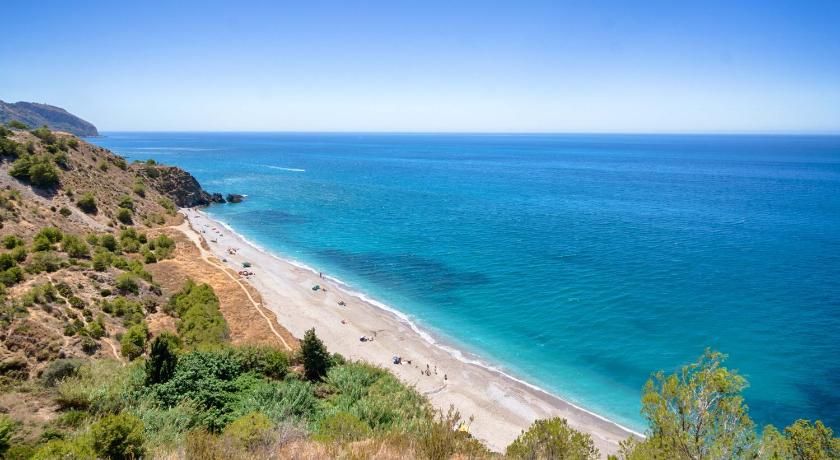
Along the coast, rocky promontories and coves also tell a story of vigilance. The Torre de Maro, built in the sixteenth century, was part of a system intended to warn and defend the populations of Nerja and Maro. Smoke by day and fire at night could signal danger at sea. Its position above the coastal landscape gives this defensive history a clear geographical context, without separating the tower from the headlands and beaches it was meant to watch.
Water, industry and the making of Nerja
Water was an engine of local industry as well as a feature of the landscape. The San Antonio Abad sugar works stood beside the River Chíllar, close to the historic settlement. Its complex once included mills, workshops, a chapel and water channels; surviving walls and parts of its hydraulic infrastructure recall an enterprise that helped shape Nerja’s urban development and the organisation of the surrounding land.
Further east, the industrial remains around Maro broaden the picture. The paper mill by the River de la Miel produced both wrapping paper and finer paper for writing, while the San Joaquín sugar works processed sugar cane and alcohol. Its associated water system included the brick-built Águila aqueduct, which carried water from the Sierra Almijara. These sites reveal a history of agriculture and manufacturing that is easy to miss if Nerja is seen only as a coastal destination.
In the town, the Ermita de Nuestra Señora de las Angustias offers a quieter architectural point of reference at the edge of the historic centre. Its plain combination of masonry and brick contrasts with the scale of the industrial remains beyond it. Taken together, Nerja and Maro are best understood as a meeting of coast, mountain water and working history: a place whose character lies as much in the traces of how it was made as in its landscape.