Palma del Río’s story is written across a remarkably broad landscape of time. The town stands on the banks of the Genil, close to its meeting with the Guadalquivir, on almost level ground. Its historic core grew within a walled enclosure, where the compact street pattern contrasts with the more regular layout beyond. Here, the setting is not a backdrop to the town’s history: the riverside position and the shape of the ground help explain both its defences and its long record of settlement.
Inside the medieval enclosure
The Alcazaba and the surrounding Cerca form the historic heart of Palma del Río. The Alcazaba may have Almoravid origins; the enclosing walls were built by the Almohads in the early thirteenth century. Their substantial tapial construction—rammed earth formed in layers—still gives the surviving stretches a powerful presence. Towers, remnants of the battlemented walk and gateways, including the Arquito Quebrado, help reveal how the enclosure was organised. The riverside sides were less heavily fortified, with the Genil offering a natural line of defence.
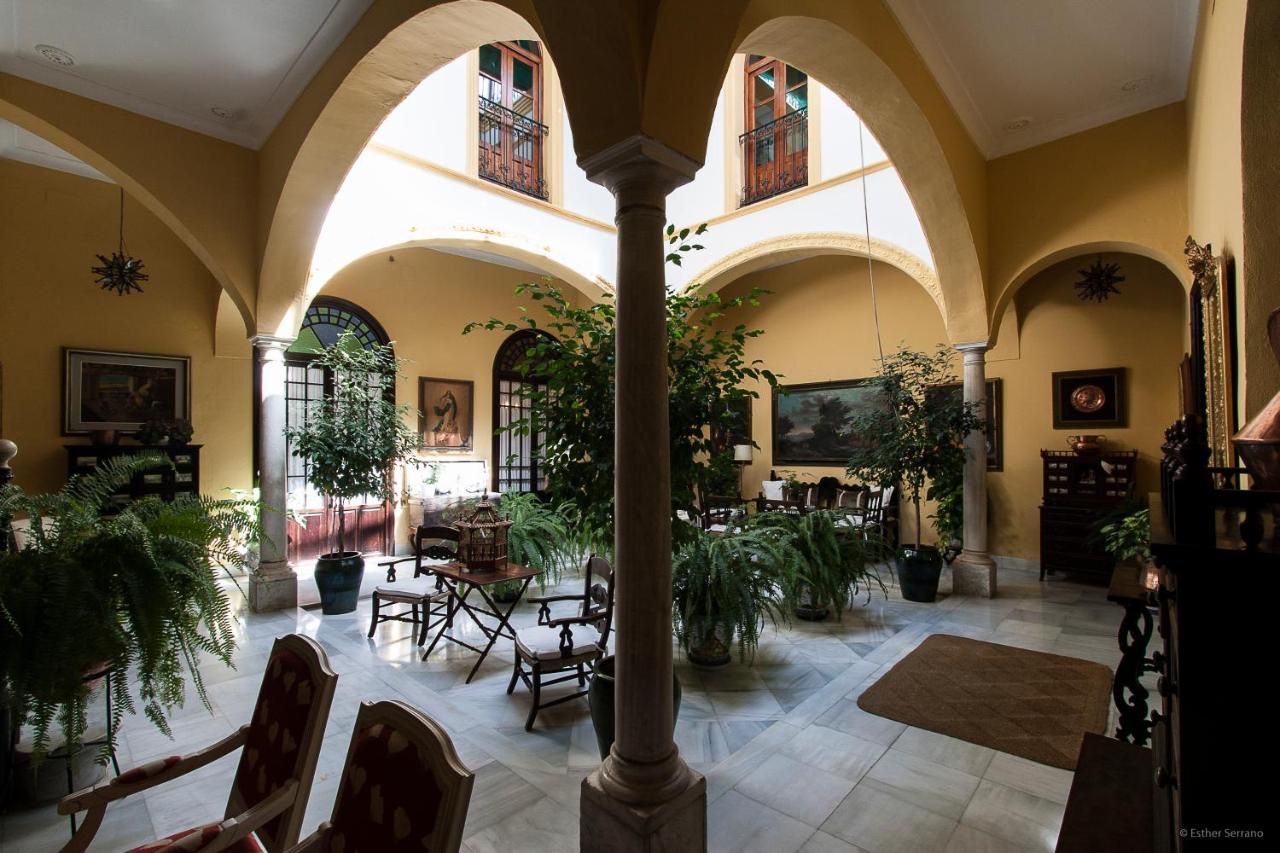
Within this boundary, a simple network of streets and small squares leads towards the Puerta del Sol. The town’s architectural history is not confined to military remains. At the Palacio de los Portocarrero, a sixteenth-century building, two courtyards bring together elegant arcades on marble columns and richly worked ceilings. Its principal façade includes a two-storey loggia; a plateresque balcony, with an iron balustrade and the family arms above, gives the exterior a particularly distinctive detail. Later alterations are visible in the building’s layered forms.
Churches, courtyards and the wider landscape
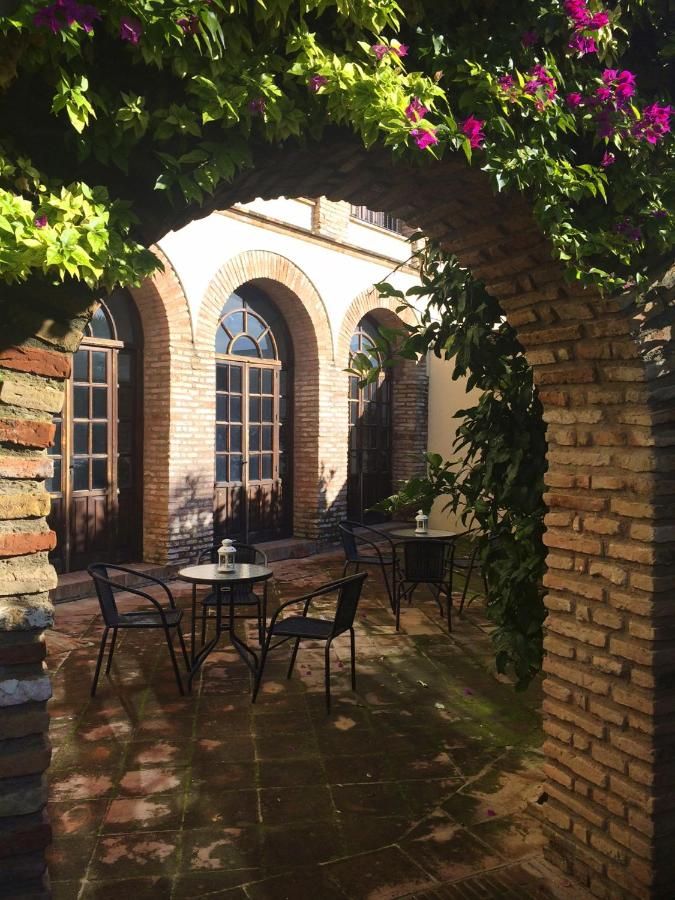
Religious architecture adds other registers to the town’s character. The former convent of Santa Clara is notable for its square Mudéjar cloister, arranged over two levels, with brick columns and arcades whose details vary from side to side. The Church of Nuestra Señora de la Asunción offers a different expression: a Baroque interior with a large dome, while its slender brick tower was completed in 1737. These are not interchangeable monuments; their contrasting materials and forms make the town’s architectural variety legible at close range.
Beyond the historic centre, archaeological sites in the municipality point to a much longer history of habitation and production. Roman remains at places including Calonge Bajo and Cortijo de Romero are associated with villas, olive-oil processing and the manufacture of amphorae. Together with evidence from other periods, they place Palma del Río within a landscape shaped by settlement and agricultural work as well as by its medieval walls. The town rewards attention to both scales: the intimate pattern of courtyards and streets within the enclosure, and the wider river plain whose layers of history extend well beyond it.