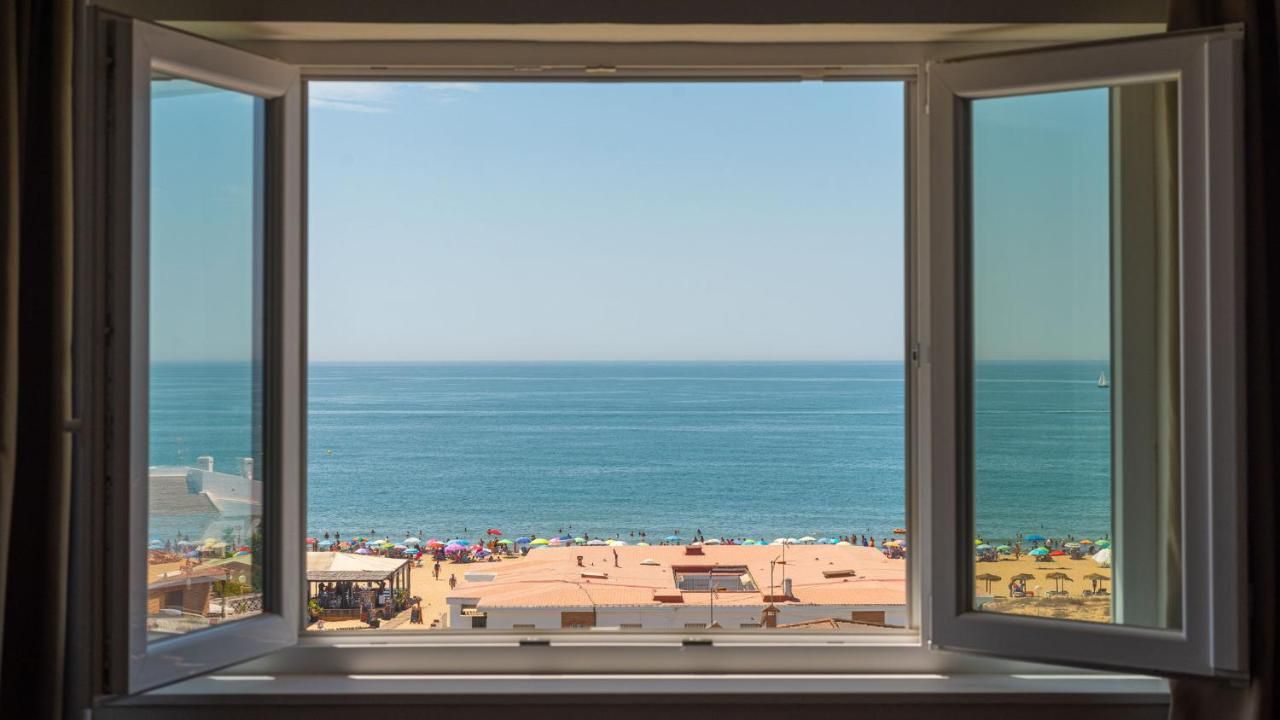
Punta Umbría sits on a narrow tongue of land between the Atlantic shore and the waters of the Odiel estuary. Its heritage records reflect that meeting of coast and estuary in contrasting ways: a defensive tower watching the river entrance, traces of Roman industry, and holiday houses whose architecture turned towards both beach and water. Together, they offer a more particular picture of the town than its seaside setting alone.
A tower at the estuary’s western edge
In the town centre, the Torre de Punta Umbría stands on Calle Lepanto, opposite the Jardines de Lourdes. Its position on the western bank of the Tinto and Odiel estuary was strategic: alongside the Torre de la Arenilla, it guarded the natural entrance towards Huelva. The tower formed part of a wider coastal defence system planned under Philip II, intended to watch and protect the shoreline from attacks by pirates and rival European states.
The tower’s sturdy, tapering form makes that purpose tangible. It rises about 14 metres, with thick masonry walls and traces of brick and stonework in its upper section. Rather than treating it as an isolated monument, it is worth reading it in relation to the waterway it was built to watch: the estuary was both a route inland and a vulnerable approach from the sea.
Roman industry on the spit
Beyond the built-up centre, the El Eucaliptal archaeological site lies on the Punta Umbría spit, north of the town. Its remains reveal an industrial settlement active from the second to the fourth centuries AD, with a later-lasting burial area extending into the fifth century. The production site made salted fish and sauces; evidence also points to purple dye-making.
Among the recorded remains are vats lined with opus signinum, walls and floors, an oven, discarded amphorae and a deposit of purple-producing molluscs. These traces bring a working dimension to the coastal landscape: the shore and estuary were not only a defensive frontier but also the setting for production and settlement in Roman times.
Holiday architecture shaped by the coast
Punta Umbría’s architectural heritage offers a different kind of coastal history. The Chalet Pérez Carasa and Villa Pepita draw on local holiday-house forms, including raised structures on pilotis, porches and viewing spaces. Their clean-lined designs also use shifting volumes and circular forms, bringing modern architectural ideas into conversation with the practical demands of a seaside residence.
Chalet Ferraro, on the estuary-facing edge of the town, makes that relationship especially explicit. Its design draws on nautical imagery, with a curved projecting form likened to a prow and a raised element resembling a bridge. Read alongside the tower and the Roman site, these houses add another strand to Punta Umbría’s character: a place shaped not just by the coast, but by changing ways of inhabiting it.