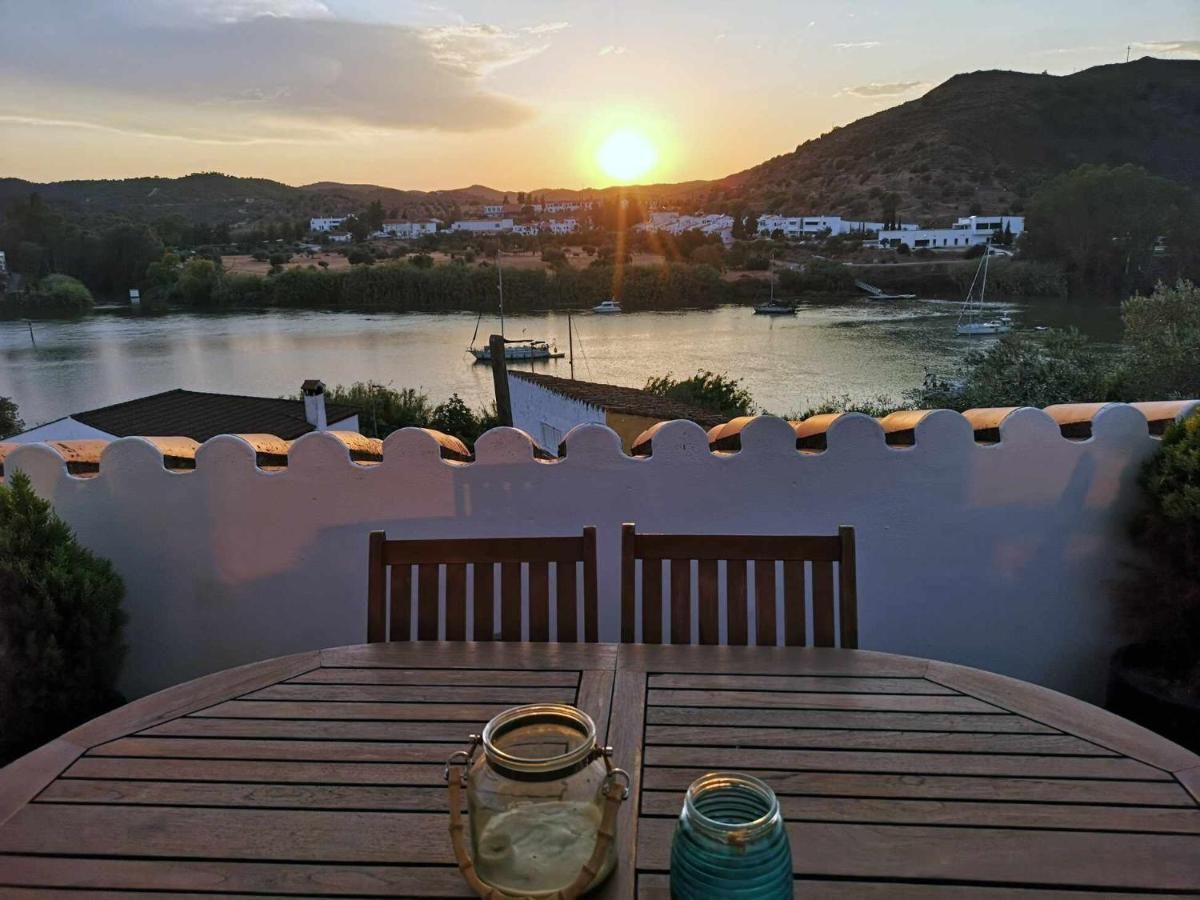
Sanlúcar de Guadiana is a riverside town whose setting and history are inseparable from the Guadiana. On the Spanish bank, the river faces Alcoutim in Portugal; above the settlement, the Castillo de San Marcos commands views across the water, the opposite town and the routes that once brought vessels to Sanlúcar’s harbour. The result is a place where a frontier is not an abstract line but a visible presence in the landscape.
A river frontier, defended from the heights
The Castillo de San Marcos occupies a steep-sided hill north-east of the town. Its present form reflects building and alteration over several centuries, from the late medieval period through the nineteenth century. The rectangular fortification has four towers, and its changing design records the transition from towers to the more developed artillery defences of later centuries. The elevated position made the river crossing and Alcoutim readily visible.
Defence extended into the settlement itself. The Fuerte de San Jerónimo was built in 1640, during the war between Spain and Portugal, to support the castle and protect Sanlúcar’s southern flank. Part of its sloping artillery front survives beside the parish church, a reminder that the town’s streets and buildings grew alongside a working border stronghold. Nearby, the Cerro de la Vieja and the Batería Artillera belong to the wider defensive landscape; the latter was oriented towards Alcoutim.
Church, mills and the working landscape
At one of the highest points in town, the Iglesia de Nuestra Señora de las Flores offers a different kind of landmark. Its three-nave plan and architectural details reflect a building history extending from the late sixteenth or early seventeenth century, with later repairs and changes. The Baroque bell gable, rebuilt after the earthquake of 1755, gives the church a distinctive presence in the townscape. Its close relationship with the remains of the Fuerte de San Jerónimo makes this part of Sanlúcar especially revealing: religious and military buildings share the same urban fabric.
Above the river, several hills preserve evidence of the work that once shaped daily life. Windmills built of slate masonry stand on elevated ground, where they could make use of the prevailing westerly winds. The restored Molino de Sanlúcar I retains its reconstructed machinery, while other mill remains preserve less complete traces of their former workings. Stone-paved threshing floors nearby belong to the same agricultural landscape. Beyond the town, the historic path towards El Granado follows the terrain past old water points, linking Sanlúcar with its neighbouring settlement.
Sanlúcar’s appeal lies in reading these layers together: the river crossing, the forts, the church and the practical structures on the surrounding hills. Look outward from the castle’s position, then back towards the town, and its history becomes a connected landscape rather than a collection of isolated monuments.