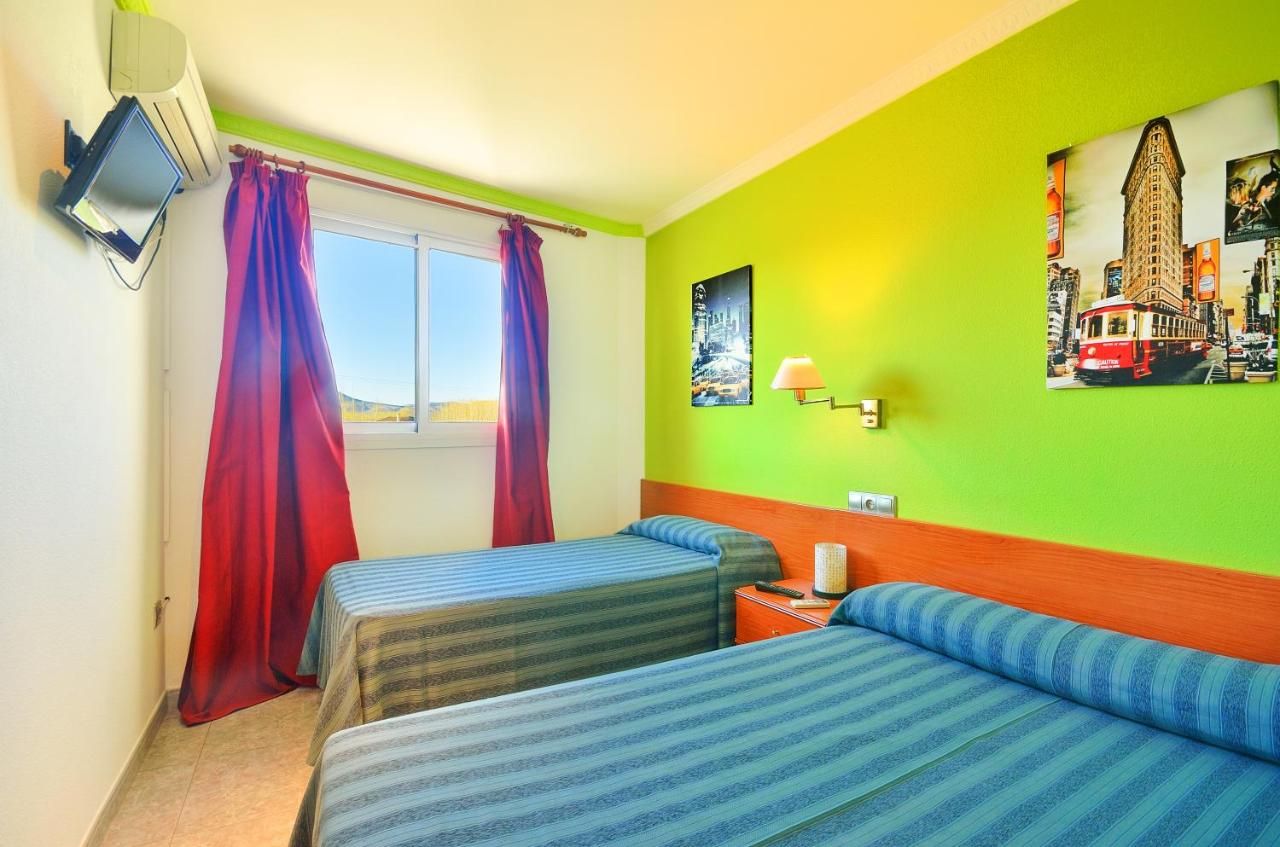
Hostal Apolo Trece, Santa Fe
Hostal Apolo Trece pairs soundproof rooms, city and mountain views, family facilities and free Wi-Fi with a stay in Santa Fe, whose distinctive grid plan still reflects its origins as a planned…
Read hotel guideThe art of finding somewhere wonderful.
Video by Nirjhar Basak on Pexels
Santa Fe is a town whose plan tells an unusually clear story. Founded in 1491 by order of the Catholic Monarchs, it was built anew as a military camp during the campaign for Granada. Its straight streets still meet at right angles, preserving the disciplined grid of that original foundation. Rather than treating the town as a backdrop to its history, a walk through the centre brings the design itself into focus.
Two principal streets cross at the central square and run towards four monumental gates, oriented towards Granada, Seville, Jaén and Loja. They mark the former entrances to a fortified settlement once enclosed by walls, towers and a defensive ditch. Those defences have largely disappeared, but the gates remain as distinctive points in the urban landscape. The Gate of Loja dates from 1652; the other three follow eighteenth-century schemes, with chapels above their central passages. At the Gate of Granada, the passage remains open and the structure houses a chapel dedicated to the Virgin of the Rosary.
The grid was more than a military convenience. The new town was divided into four quarters, assigned to the councils of Seville, Jerez, Córdoba and Andújar. Public buildings were placed near the centre, alongside the royal residence and parish church. The surviving street pattern allows that planned arrangement to be read in the present-day townscape, even though the defensive circuit itself is no longer visible.
The Church of the Incarnation, built on the site of a sixteenth-century predecessor, reflects a later chapter in Santa Fe’s development. Its late-eighteenth-century Neoclassical exterior is framed by twin towers; inside, the main nave has a barrel vault, dome and lantern. The history of the church reaches back to the years after Granada’s conquest, when a royal patronage church was established here. Its changing status and later rebuilding connect the town’s planned beginnings with centuries of religious and civic life.
Another local landmark has a more intimate origin. The Hermitage of the Cristo de la Salud was first known as the Hermitage of the Galicians, after soldiers from Galicia who built an earlier chapel in 1498. The present building followed after that first structure fell into ruin. Its changing name reflects the continuing place of devotion in Santa Fe’s identity.
Santa Fe’s heritage also reaches into the agricultural landscape of the Vega de Granada. The former Señor de la Salud sugar factory, constructed in 1890, recalls an industrial period rooted in the cultivation of sugar beet. Its buildings and former working grounds form part of a landscape shaped by agriculture, water channels, roads and railways. Together, the planned streets, monumental gateways, church and industrial remains offer a coherent way to explore Santa Fe: as a place where an ambitious foundation remains legible in both its town centre and its wider setting.
Hostal Apolo Trece pairs soundproof rooms, city and mountain views, family facilities and free Wi-Fi with a stay in Santa Fe, whose distinctive grid plan still reflects its origins as a planned…
Read hotel guide