Setenil de las Bodegas is a town whose streets reveal an unusually close relationship between settlement and stone. Its historic centre follows the deep, winding gorges of the Guadalporcún and Trejo rivers, with houses and lanes arranged along the bends and at different levels. Rather than serving simply as a backdrop, the rock shapes the town’s distinctive form.
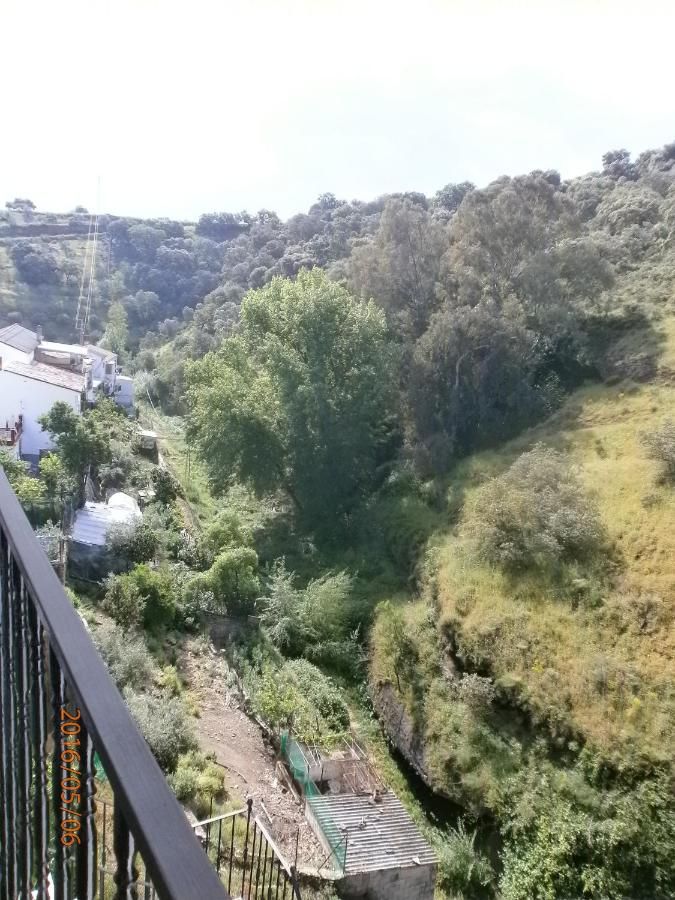
From the higher ground around the castle, the old settlement descends towards the river. The streets follow the contours of the ravines, while some homes at the bottom of the gorge are built beneath overhanging rock. These houses do not hollow out the stone: their walls close the natural shelter, and the rooms extend lengthwise beneath it. The result is a striking local architecture, closely fitted to the rock and river landscape.
A town shaped by its ravines
The centre’s steep, layered layout rewards attention to how its parts connect. Higher and lower streets track the gorge at different elevations; the river’s curves help explain the irregular plan. The town’s historic fabric is described as having a clear Muslim origin, developed within and around the cuts of the Guadalporcún and Trejo. This is not a formal arrangement imposed on level ground, but a settlement shaped by the terrain.
Bridges form part of that everyday urban structure. Among them are two eighteenth-century crossings over the Trejo on the route through Calle Triana from Torre Alháquime. Both are set among the houses, with whitewashed masonry parapets; one has a brick barrel vault. Their modest scale and close setting make them part of the streetscape rather than detached monuments.
Fortress and church above the old town
The castle occupies the highest part of the town. Its surviving remains include a square tower and an underground cistern partly cut into the rock. The fortification’s position reflects the importance of the site’s natural defences. The castle was taken from the Moors in September 1484, a moment also associated with the town’s late-medieval history.
Nearby, the Church of Nuestra Señora de la Encarnación stands within the old citadel. Built over the town’s principal mosque with the patronage of the Catholic Monarchs, its construction began in the late fifteenth century and continued, with interruptions, until 1614. Its ambitious design includes a pronounced crossing and ribbed vaults; the church’s unfinished history adds another layer to the settlement’s long development.
Setenil’s appeal lies in reading these elements together: gorge, street, rock-sheltered house, bridge and hilltop landmarks. The town is best understood not as a collection of isolated sights, but as a place where the natural contours remain visible in the shape of daily architecture.