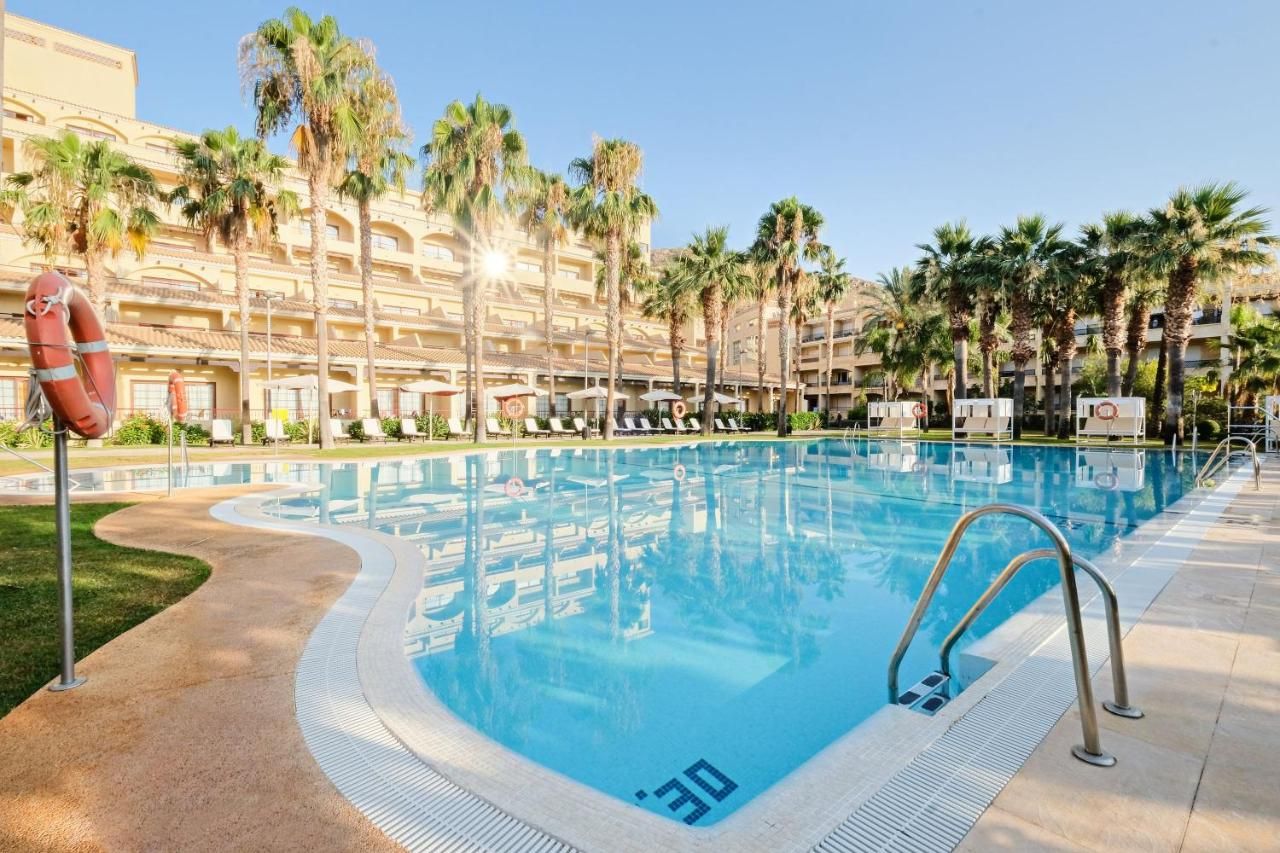
Hotel Envía Almería Spa & Golf, Vícar
Hotel Envía Almería Spa & Golf pairs golf with indoor and outdoor pools, a hammam, fitness facilities and massage in Vícar. Its broad on-site leisure offer sits within a municipality shaped by…
Read hotel guideThe art of finding somewhere wonderful.
Video by Nirjhar Basak on Pexels
Vícar’s heritage is found across a landscape shaped by both long-standing farming and more recent change. On the foothills of the Sierra de Gádor, agricultural land around the municipality has been extensively transformed by intensive cultivation under plastic, introduced from the 1970s. The heritage records also preserve traces of earlier ways of living and working here: archaeological sites, traditional irrigation and the buildings of a rural estate.
The Iglesia de San Benito is a striking example of a sixteenth-century Mudéjar church-fortress, a form characteristic of Almería province. Its tower, aligned with the head of the church and attached to its southern side, gives the building a defensive appearance. The church’s interior is a single nave beneath a timber roof whose structure is particularly elaborate: paired rafters are reinforced by six pairs of tie beams, with carved supports and decorative detailing. Outside, the principal side entrance is framed by a broad semicircular arch, above which sits a stone coat of arms. The building brings together religious architecture and a sense of fortification in a form rooted in the province’s history.
At Cortijo de Tartel, the remains of a settlement with occupation dating back at least to Roman times speak to the long agricultural history of the area. Although later intensive cultivation has greatly altered the structures, a small water-capture channel survives as evidence of traditional irrigation. Its precise date is difficult to establish, but it documents a simple system associated with an agricultural tradition that developed from Roman foundations and flourished in the Middle Ages.
Casablanca offers a different glimpse further back in time. A small prehistoric occupation stood on a hill overlooking fertile land. Though the remains are sparse and have been eroded, the site is significant for tracing the spread of the Copper Age culture associated with Los Millares and the transition towards the Bronze Age.
The Cortijo Casablanca estate brings together rural buildings and the practical infrastructure of farming. Its enclosed grounds include a principal house, a garden and trees, while paths connect the buildings with a mill, workers’ dwellings, a water reservoir and livestock facilities. The farmhouse also recalls the area’s nineteenth-century rural life: records from that period mention a cortijo at Casablanca and a privately owned hermitage there.
In Vícar, these layers are not a single, neatly preserved story. They are a varied record of settlement, worship, water management and cultivation, set against a landscape whose working character has continued to change.
Hotel Envía Almería Spa & Golf pairs golf with indoor and outdoor pools, a hammam, fitness facilities and massage in Vícar. Its broad on-site leisure offer sits within a municipality shaped by…
Read hotel guide