Viñuela’s character comes into focus through the buildings that once sustained everyday life. Its recorded heritage is not a procession of grand monuments, but a more intimate account of work and home: a forge, an oil mill and modest houses whose layouts preserve the rhythms of rural living. Read together, these places offer a grounded way to understand the town’s built character.
Workshops and working lives
The forge is especially vivid in its practical arrangement. In the main room, the forge hearth faced the entrance, with bellows and a water trough beside it; the anvil stood between the hearth and the blacksmith’s bench. A second hearth occupied the back of the room. The description records river-stone masonry, a tiled roof and a remarkably well-preserved interior and set of tools. Rather than presenting an abstract picture of traditional craft, the building shows how its equipment and spaces were organised around the work itself.
Another record traces the changing use of an oil mill in the centre of the village. Its L-shaped plan separated the press and millstones from the cellar and office. A crossbeam supporting the roof had once served as a ship’s mast, an unusual detail in an otherwise functional building. The former mill is now described as a residential property; its history belongs to the record of local working life, not to an assumption that it operates as a visitor attraction.
Houses shaped by daily routines
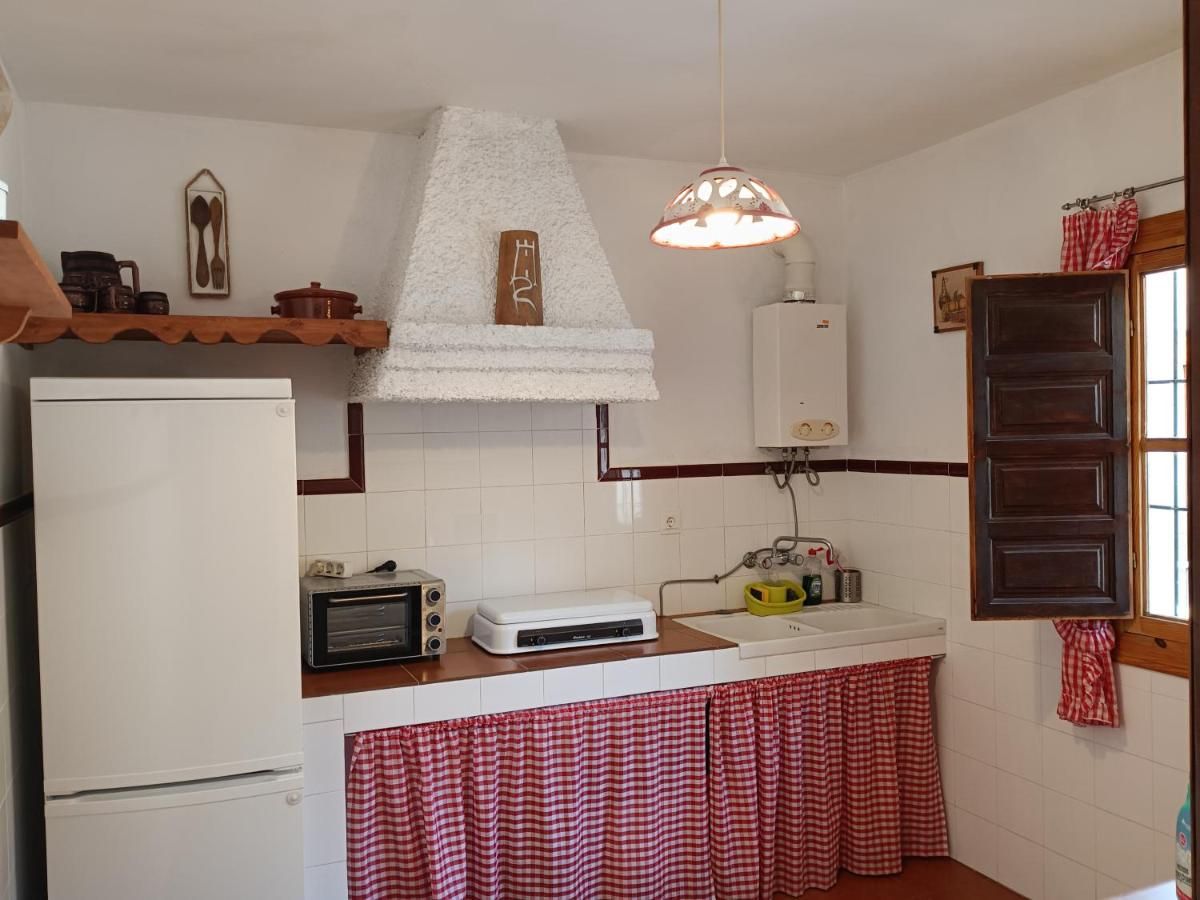
Several recorded homes make the same everyday history visible on a smaller scale. Their descriptions note narrow passages, adjoining rooms, stairs, patios, chimneys and upper storage spaces, with whitewashed façades and construction using local stone, earth mortar, timber and cane. These are not interchangeable details: together they suggest houses arranged around domestic work and the practical demands of limited space. One particularly well-preserved example retains many original features, including timber elements and terracotta floor tiles.
The town’s newer fabric also responds directly to its setting. A housing scheme on a steep slope was designed around the difficult topography, with stepped buildings, ascending routes and public spaces at different levels. A century-old olive tree was retained at the centre of a small plaza. Here, the landscape is not simply a backdrop: the slope shapes the architecture and the way the spaces connect.
Viñuela is best approached with an eye for these modest but revealing relationships between work, home and ground. Its recorded buildings tell a local story through their plans, materials and adaptations, offering a quieter perspective on Andalucía’s heritage than a catalogue of celebrated monuments.